
Security Systems in Jackson, TN: What to Look for Beyond a Basic Alarm
Jackson’s growth is real and it’s changing what security needs to cover. The 120-acre Tiger Jones Technology Park has been landing new employers, the city’s Planning Department reviewed 22 commercial and industrial site plans in 2025 alone, and new and expanding companies have brought roughly $656 million in investment and over 825 new jobs to the area recently. New construction, new commercial sites, and more unattended property all mean more exposure — and a basic alarm panel doesn’t cover most of it.
I’m Chris Edens. My background is seven years in corporate security work, and most of what’s below is aimed at property owners and site managers in Jackson and West Tennessee deciding what actually needs to be part of their security setup, not just an alarm that goes off after something’s already happened.
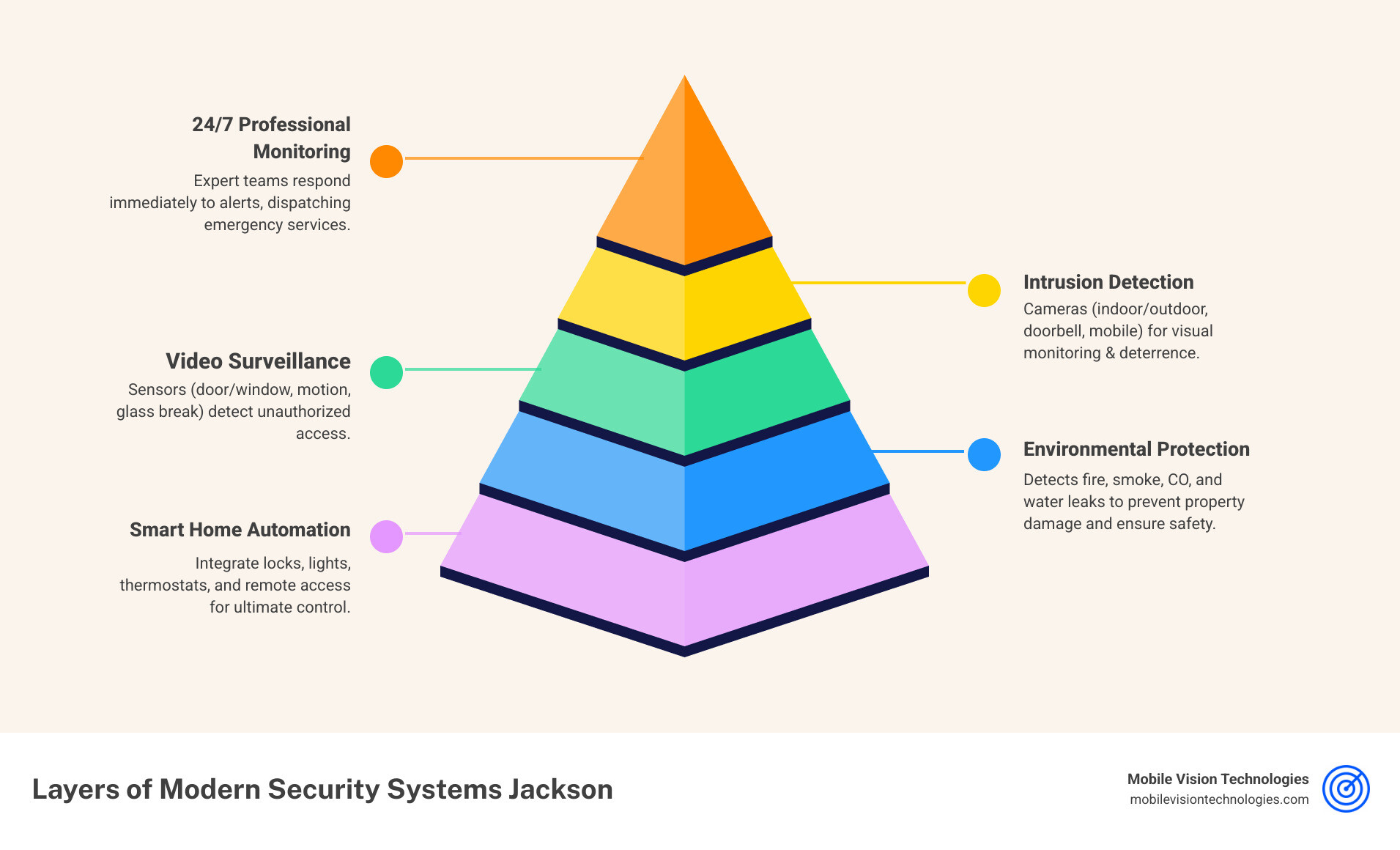
Where Jackson’s Security Demand Is Actually Coming From
Jackson’s crime rate runs above the state and national averages — it’s a fact worth being straightforward about, not glossing over — but the more relevant trend for property owners is direction: Jackson’s crime rate is projected to be lower in 2026 than it was in 2019, a genuine improvement even with the current rate still elevated. That’s context, not a reason to skip security — commercial growth and construction activity create new unmonitored property faster than crime trends improve, and unmonitored property is what actually gets targeted.
The Tiger Jones Technology Park expansion, the cluster of Japanese manufacturing firms contributing over $1 billion to the local economy, and West Tennessee Healthcare’s continued growth as the region’s largest employer all mean more active construction sites, more commercial buildouts, and more temporarily unsecured property during transitions — exactly the conditions where a basic alarm panel doesn’t help, because there’s nothing installed yet to trigger it.
For broader crime-trend context beyond any single vendor’s marketing claims, the FBI’s Uniform Crime Reporting Program is a reasonable independent reference point.
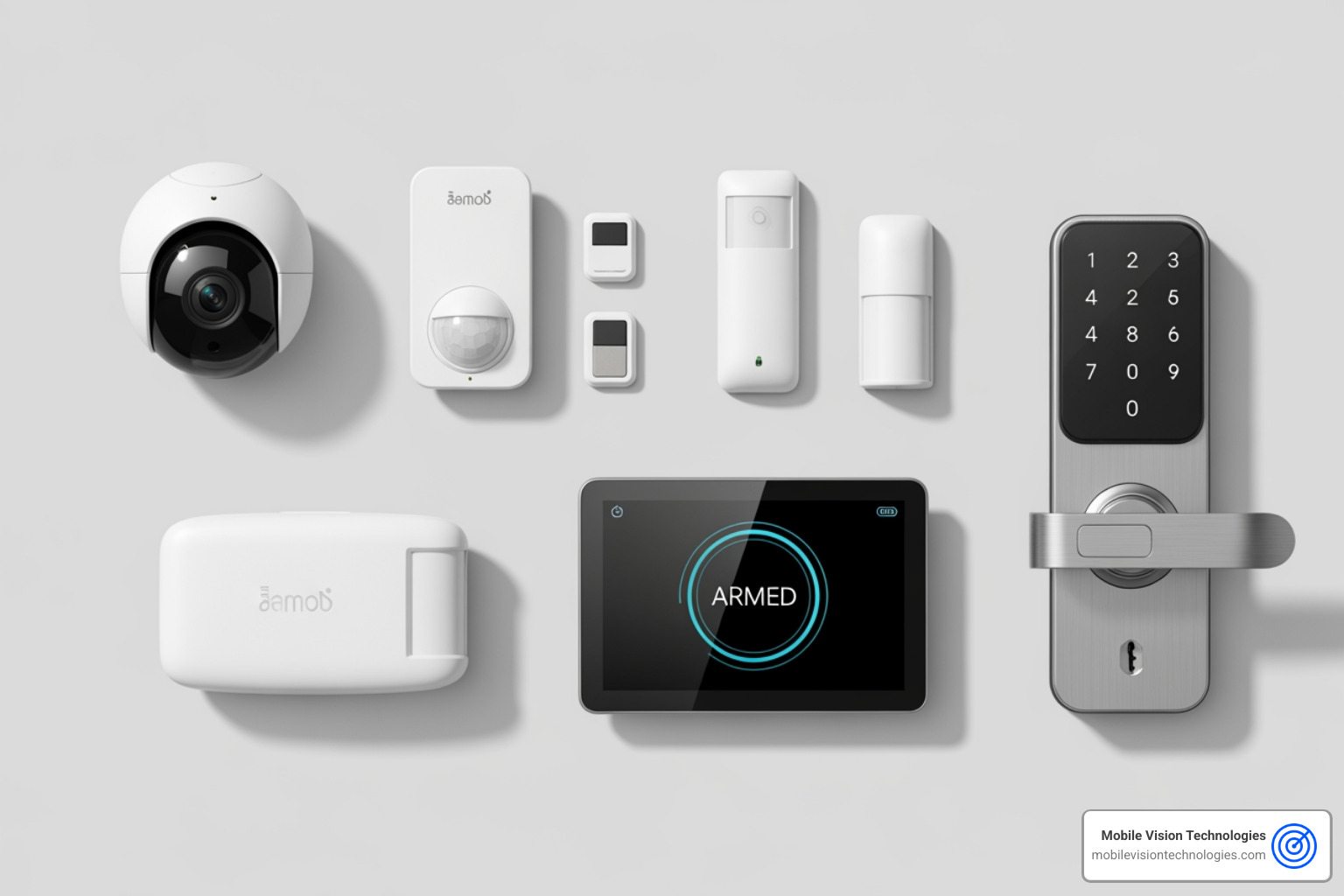
Monitored vs. Unmonitored Systems
Monitored systems send an alarm signal to a professional monitoring center, where a trained analyst verifies the alert and dispatches police, fire, or medical response. This is the standard for anything where a fast, reliable response actually matters — active construction sites, commercial property overnight, or any location without staff nearby.
Unmonitored systems are local alarms — a siren or flashing light, sometimes a phone notification — that rely on you or someone nearby to notice and call for help. Fine as a supplementary deterrent, not something to rely on as your only response mechanism for a commercial site or active project.
Beyond Burglary: What Modern Systems Actually Cover
- Fire and life safety — smoke and heat detection tied to automatic dispatch, particularly relevant for active construction sites where fire risk is elevated and there’s no one on-site overnight to notice.
- Environmental monitoring — water leak sensors and carbon monoxide detection for occupied commercial space.
- Perimeter and asset protection — the part most relevant to construction, industrial, and commercial property: coverage of equipment yards, loading docks, and site perimeters where theft and vandalism actually happen.
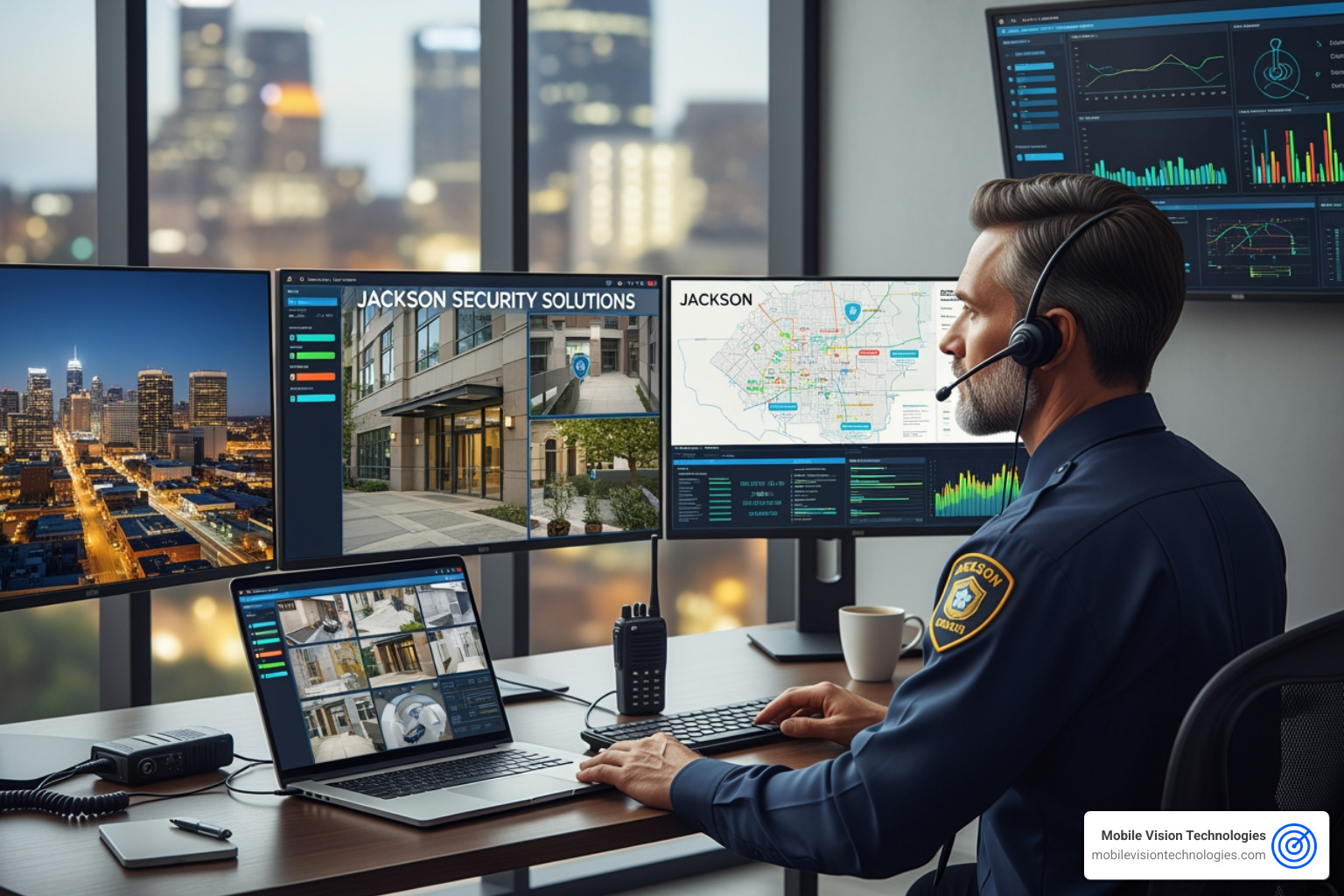
Where Mobile Surveillance Fits
Fixed systems assume a site already has power, network, and a reason to justify permanent infrastructure. A lot of what’s driving Jackson’s current growth — active construction at Tiger Jones and elsewhere, new commercial buildouts, temporary site conditions during expansion — doesn’t meet that bar. A solar-powered, cellular-connected mobile surveillance trailer covers exactly that gap: deployed in days, no permanent infrastructure commitment, relocated as the site’s risk areas change.
For active builds specifically, this means coverage of equipment, materials, and the site perimeter during the exact window — mid-construction, pre-occupancy — when there’s no fixed security in place yet and the most valuable, most stealable material is sitting exposed.
Professional Installation vs. DIY
For a straightforward residential alarm, DIY is a reasonable option. For anything involving multiple cameras, smart integration, or mobile surveillance units, professional installation matters more — proper camera placement and coverage planning isn’t something most site managers have the time or the training to get right on the first try, and a poorly placed camera is functionally the same as no camera.
Choosing a Local Provider
A provider with actual West Tennessee experience understands things a national call center doesn’t: what property crime actually looks like locally, which sites are seeing new construction activity, and how to reach someone quickly if a system goes down. Before signing with anyone:
- Check contract length and cancellation terms. Long-term contracts (36+ months) are common in this industry — look for month-to-month options if you want flexibility.
- Get 24/7 support confirmed, not assumed. A system that goes down overnight with no one to call is a real problem for an unmanned site.
- Ask what’s actually included versus billed separately — monitoring, cloud storage, and maintenance costs should be itemized upfront.
Get the Right System for Your Jackson Property
Whether you’re securing an active construction site near Tiger Jones Technology Park, a new commercial buildout, or an existing property that’s outgrown its current setup, our mobile trailer camera systems pair with full alarm and intrusion detection and mobile video surveillance support. Request a free quote and we’ll assess your site and recommend what actually fits — not a generic package with the city name swapped in.