
Mobile Security Camera Trailer Rental in Nashville: What to Know Before You Rent
Protecting Your Nashville Property with Smart Surveillance
Nashville’s growth isn’t slowing down, and neither is the list of things that need watching because of it — construction sites in Germantown, event lots around Nissan Stadium, retail and logistics properties spread across Davidson County. A mobile security camera trailer is a genuinely good fit for a lot of that: no permits, no trenching, deployed in a day or two, gone when the job is. Here’s what you’re actually getting when you rent one, what it costs, and where it does — and doesn’t — make sense.
I’m Chris Edens. My background is seven years in corporate security work plus time in the military, and most of what’s below comes from sitting across the table with Nashville property managers and construction supervisors figuring out whether a mobile unit or a fixed system is the right call for their site.
Why Rent Instead of Install Something Permanent?
The case for a mobile trailer over a fixed camera system comes down to one question: how long do you actually need coverage at this exact spot? If the answer is “as long as I own the building,” fixed infrastructure usually wins on long-term cost. If the answer is “until this phase of the project wraps” or “for the length of this event” or “until we figure out if this location is worth a permanent investment,” a rented trailer wins on almost every axis that matters:
- No infrastructure commitment. No conduit, no electrician, no permit application for a system you’ll remove in three months.
- Visible deterrence. A camera mast with strobe lighting reads very differently to someone casing a site than a small dome camera bolted to a wall.
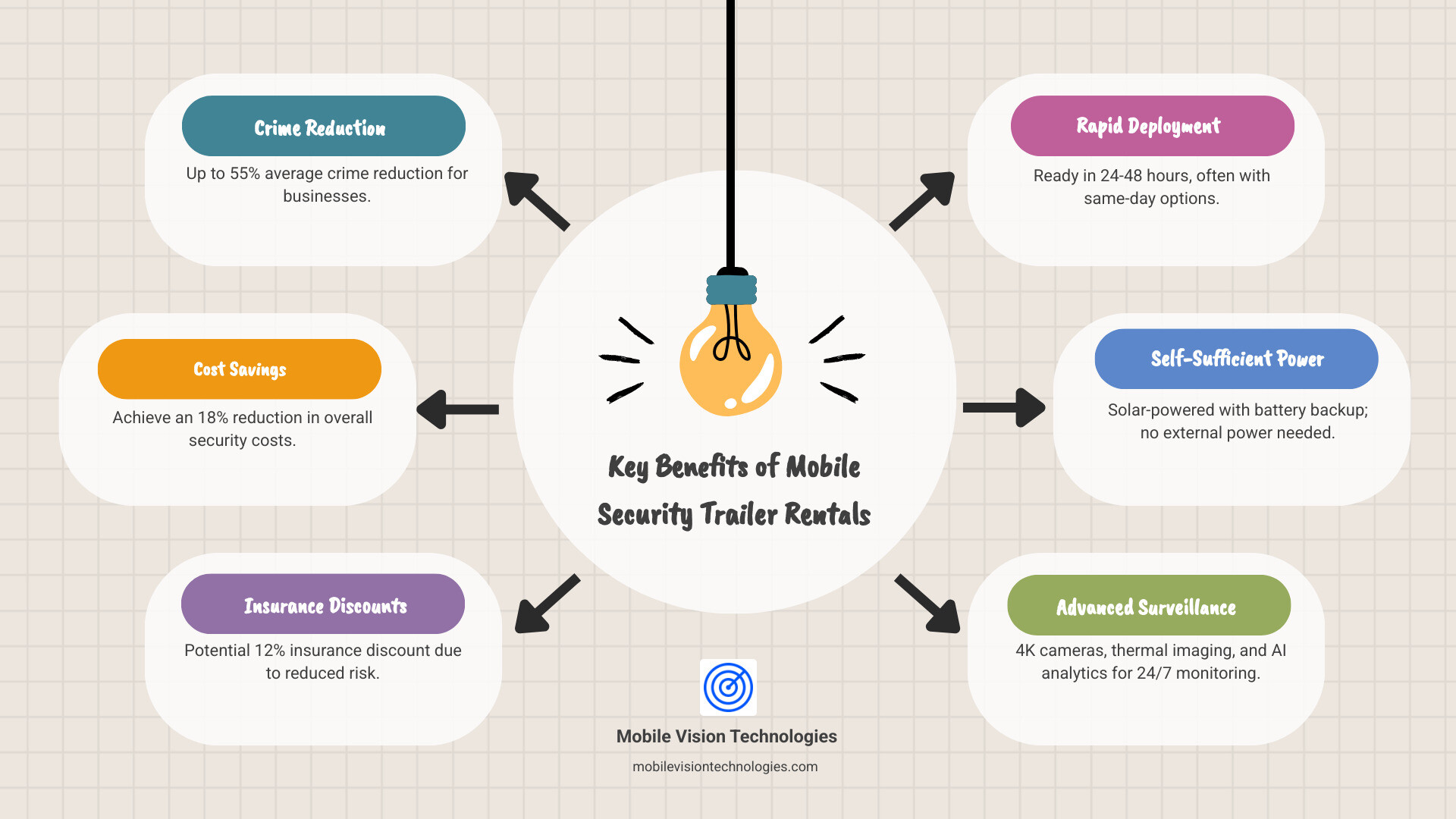
- Deployment in days, not weeks. Traditional fixed-camera installs can take weeks between quoting, permitting, and scheduling an install crew. A trailer can be on-site and operational in 24–48 hours, with same-day options for urgent situations.
- It moves with the risk. A construction site’s vulnerable point changes as framing goes up. An event’s security needs shift from load-in to the event itself to load-out. A trailer repositions; a fixed camera doesn’t.
Where This Actually Gets Used in Nashville
Construction sites — particularly active builds in Germantown and along road-improvement and bridge-repair corridors — are the single biggest use case. Materials, tools, and equipment left on an unlit site overnight are an easy target, and a visible trailer with a camera mast changes that math for anyone scouting the property.
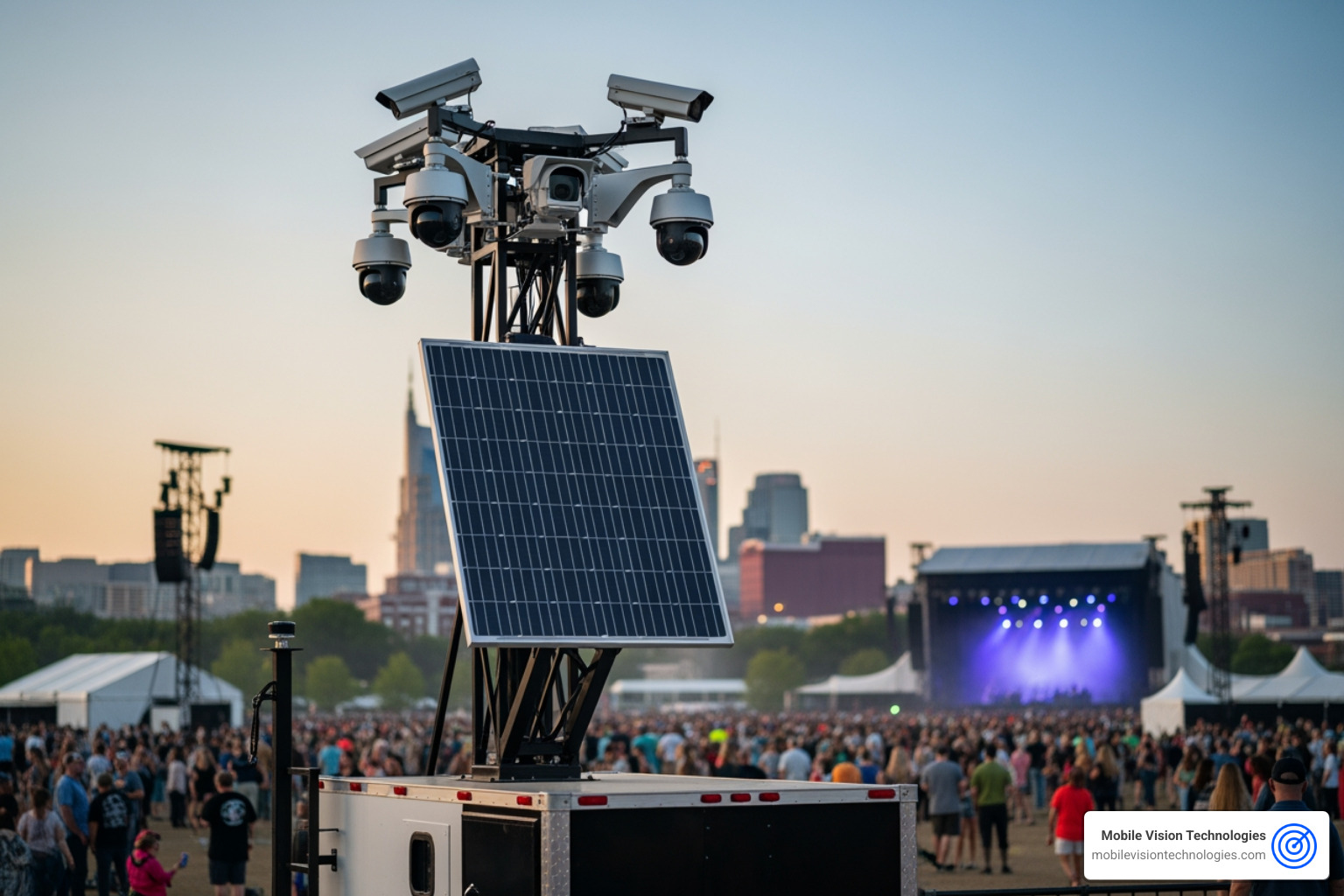
Special events — Nashville doesn’t go more than a few weeks without a festival, stadium event, or large public gathering, and each one needs temporary coverage for crowd flow, parking, and incident response that doesn’t justify permanent cameras.
Retail and commercial properties — during renovations, seasonal peaks, or in properties where after-hours coverage is a gap, a trailer covers the exposure without a capital investment in a fixed system.
Logistics yards and overnight fleet storage — vehicle and cargo theft in unmonitored lots is a real and recurring problem for companies storing equipment or inventory overnight.
Critical infrastructure sites — utilities, water treatment facilities, and similar properties sometimes need an added layer of temporary coverage during specific vulnerability windows (maintenance work, known threats, etc.) without a full permanent buildout.
What’s Actually Inside the Trailer
These aren’t just a camera bolted to a pole. A properly built unit includes:
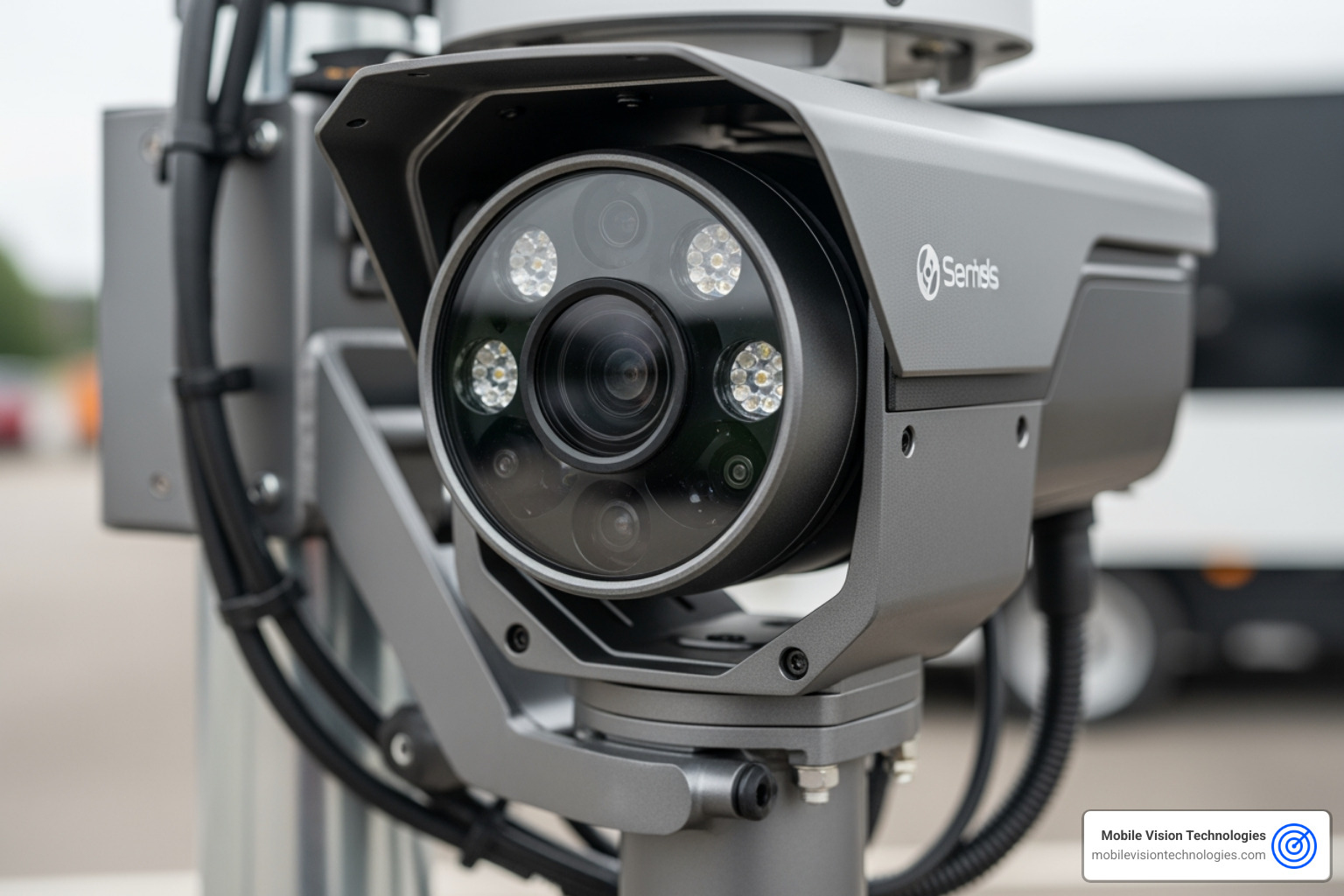
- 4K cameras with clear footage day and night, including in low light
- PTZ (pan-tilt-zoom) capability so an operator can direct attention to a specific area in real time
- Thermal/infrared imaging for full darkness or poor-visibility conditions like fog and heavy rain
- AI-powered analytics that distinguish a person or vehicle from irrelevant motion (blowing debris, wildlife), cutting down on false alerts
- Solar power with battery backup, so the unit runs independent of site electricity — genuinely useful on a construction site with no power yet run
- Cellular connectivity (4G/5G) so it doesn’t depend on site Wi-Fi, which frequently doesn’t exist yet on a raw construction lot
- LED strobe lighting and two-way talk-down audio, which let a monitoring operator (or you, via the mobile app) verbally address someone on-site in real time
What It Costs, Roughly
Pricing depends on trailer count, feature set (thermal, LPR, AI analytics all add cost), monitoring level, and rental length — but the general shape is:
- Rental terms typically run 1, 3, 6, or 12 months, with multi-year rates for longer projects
- Self-monitoring vs. professional monitoring is the biggest cost lever — a staffed central monitoring station costs more than self-monitoring via the app, but means a trained analyst is actually watching and can dispatch a response
- Footage retention is usually 28 days onboard by default, with cloud backup available for longer retention at additional cost
- There shouldn’t be hidden fees — get monitoring, cloud backup, and delivery/setup costs itemized upfront before signing anything
For context on how camera-based deterrence factors into crime prevention more broadly, the Wikipedia overview of closed-circuit television is a reasonable starting point if you want the general research behind the technology, separate from any single vendor’s marketing claims.
What the Local Data Actually Shows
It’s worth being straight about this: Nashville’s overall crime trend has been moving in a good direction. Metro Nashville and the Davidson County District Attorney’s office reported historic lows in 2025, with robberies down roughly 26% and burglaries down more than 13% year-over-year. That’s a genuinely positive citywide trend, and it’s not a reason to skip site-level security — it’s a reason to be honest about what a camera trailer is actually for.
A citywide crime rate dropping doesn’t mean a specific unmonitored construction site or event lot stops being a target — it often means opportunistic theft concentrates more on the sites that are visibly unprotected. A recent example: a construction site in nearby Mt. Juliet lost roughly $30,000 in tools and equipment in a single overnight theft, the kind of incident a visible camera trailer with active monitoring is specifically designed to prevent or at least document for insurance and police. The lesson isn’t “crime is rampant in Nashville” — it’s that individual sites still carry real exposure even as the citywide numbers improve, and the sites without visible security are disproportionately the ones that get hit.
Legal and Privacy Considerations
A few things worth knowing before you deploy:
- Camera field of view should be focused on your own property. If a camera captures neighboring private property where someone has a reasonable expectation of privacy, that’s a liability issue independent of whether it’s legal in the strict sense.
- Signage indicating active surveillance is considered best practice in Nashville and, depending on the specific use case, may be required. It also adds a deterrence layer on its own.
- Footage storage and access should be limited to authorized personnel, with a clear retention policy rather than an indefinite one.
- Local Davidson County ordinances can add requirements beyond state and federal baselines — worth a quick check with your provider or legal counsel if your deployment is anything other than straightforward private-property monitoring.
Frequently Asked Questions
How quickly can a trailer be deployed in Nashville? Often within 24 hours, with same-day options for urgent situations. Actual timing depends on site readiness and current demand.
What happens during a power or internet outage? Solar panels and battery backup keep the unit running independent of site power, and onboard cellular connectivity means it doesn’t depend on your site’s internet or Wi-Fi.
How do I actually access the footage? Through a cloud-based video management system accessible from a phone app or web browser, with live feeds, recorded footage, and configurable alerts for motion or specific events.
Renting for a Construction Site, Event, or Property in Nashville
If you’re weighing a mobile trailer against a fixed system, or just need coverage for a specific project window, we can walk through what actually fits your site rather than a generic package. Our mobile trailer camera systems are paired with AI-powered video surveillance, alarm and intrusion detection, and full installation, maintenance, and monitoring support if you’d rather not manage it yourself. For construction-specific coverage, see our construction site surveillance page, and if you’re managing more than one property, our multi-location security solutions page covers how centralized monitoring works across sites.
Request a free quote and we’ll assess your Nashville property and recommend the right configuration for your timeline and budget.