
Property Intrusion Detection: Secure Your Space 2026
Why Property Intrusion Detection Matters Now More Than Ever
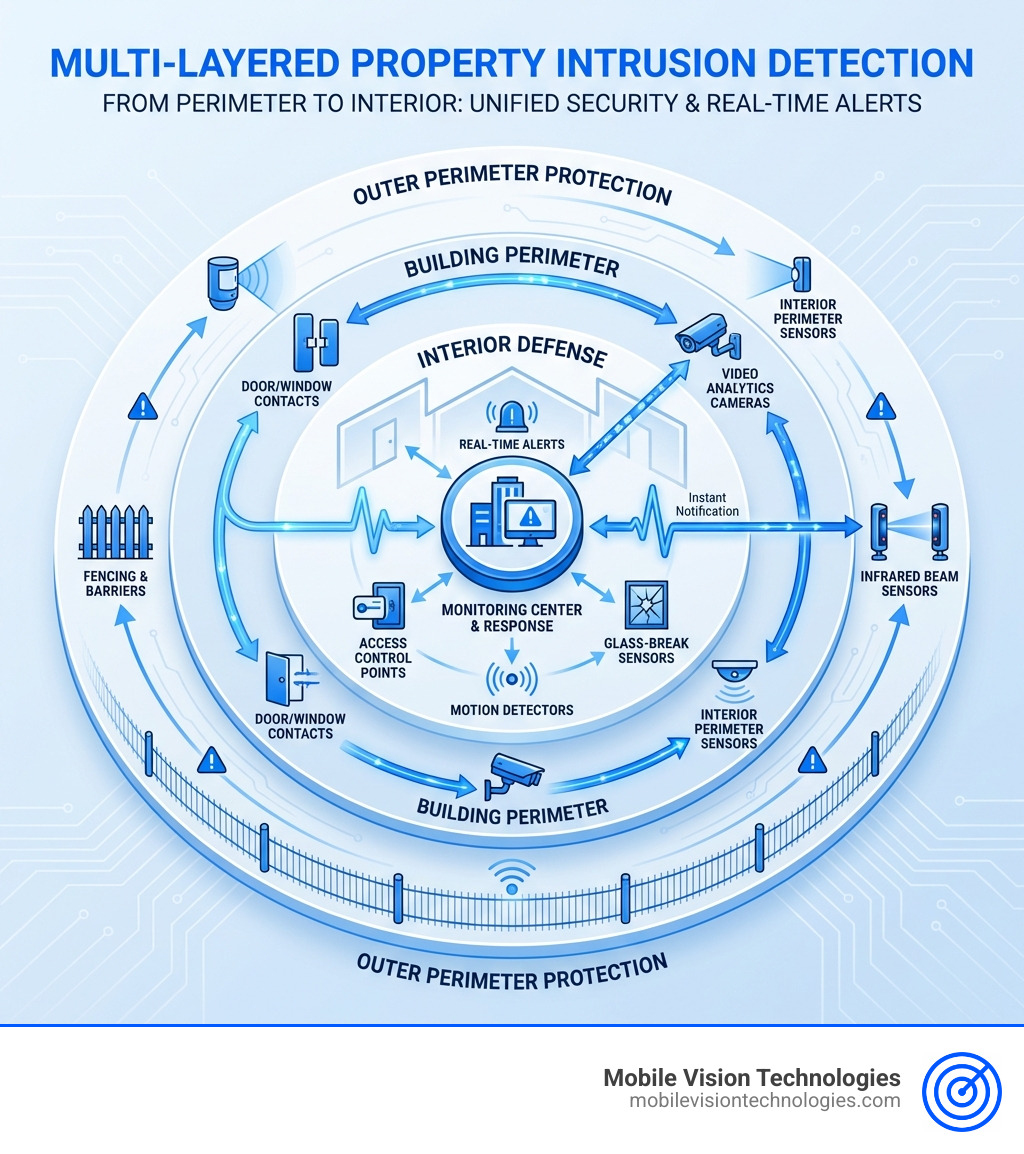
Property intrusion detection systems are security solutions designed to identify and alert you to unauthorized access or suspicious activity on your premises. They combine sensors, cameras, and intelligent software to create multiple layers of defense—from your property’s perimeter to sensitive interior spaces—helping you respond to threats before they escalate into costly incidents.
Key aspects of property intrusion detection include:
- Perimeter protection using motion sensors, infrared beams, or video analytics to detect intruders at your property’s edge
- Interior monitoring with glass-break sensors, door contacts, and motion detectors for vulnerable entry points
- Real-time alerts sent directly to you or security personnel when suspicious activity occurs
- Integration with existing security systems like cameras, access control, and alarm monitoring
- AI-powered analytics that reduce false alarms by distinguishing real threats from environmental factors
The numbers tell a sobering story: there is one burglary every 13 seconds, with over 109,000 cases recorded last year and more than 600,000 businesses falling victim to crime. These aren’t just statistics—they represent real losses, disrupted operations, and compromised safety for employees and assets. Without an advanced warning system, breaches can go undetected for far too long, leading to operational disruption, compliance penalties, and serious financial damage.
Modern property intrusion detection goes far beyond simple door locks or basic alarms. Today’s systems provide intelligence and early warning, acting as vigilant digital guards that observe, analyze, and notify you the moment something seems wrong. Whether you’re securing a construction site, warehouse, retail location, or critical infrastructure, a well-designed intrusion detection system creates layers of protection that adapt to your specific vulnerabilities.
At Mobile Vision Technologies, we combine deep expertise in both traditional security and advanced IoT technology. With years of experience in property intrusion detection, we’ve seen how the right system can prevent incidents before they happen, especially for large, remote, or temporary sites where traditional security falls short.
What is a Property Intrusion Detection System (IDS)?
At its core, a property intrusion detection system (IDS) is your vigilant guardian, constantly monitoring physical spaces, perimeters, or specific assets for any signs of unauthorized entry, presence, or suspicious activity. Think of it as a diligent team of guards, but instead of physical patrols, it uses technology to observe, analyze, and notify security teams or property owners the moment something is amiss. It’s a crucial early warning system in our modern security landscape.
Why is this so vital for modern security strategies? Because simple locks are no longer enough. While they prevent entry, they don’t provide intelligence about who tried to enter, when, or how. An IDS goes beyond mere prevention by providing critical insights, giving you the visibility needed to stay protected. When a break-in occurs, the impact on your employees and business can be significant, from financial losses to emotional distress and operational downtime. An IDS helps you detect these threats, allowing for rapid response and minimizing potential damage.
The need for robust security isn’t just about protecting physical assets like equipment, inventory, or blueprints; it also extends to safeguarding data centers, operational technology, and, most importantly, the people who work or reside within your properties.
Furthermore, the regulatory and compliance landscape is rapidly evolving. The market for regulatory and compliance solutions is projected to grow significantly, from $3.48 billion in 2024 to $9.02 billion by 2032. This growth reflects an increase in both industry regulations and governmental mandates, all of which demand robust monitoring, auditing, and rapid incident response capabilities. A comprehensive IDS helps you meet these growing demands, ensuring your operations remain compliant and secure.
For a broader background on how intrusion detection fits into modern security practices, you can also review the general overview of Intrusion detection systems on Wikipedia.
At Mobile Vision Technologies, we understand the importance of a robust IDS. It’s not just about reacting to a breach; it’s about proactively defending your premises. This is why we offer advanced Alarm & Intrusion Detection solutions designed to provide peace of mind and superior protection for properties across Memphis, Bartlett, Southaven, Jackson, Germantown, Lakeland, and Olive Branch.
The Core Components and Types of Intrusion Detection
Effective property intrusion detection relies on a layered security approach, integrating various technologies into a unified system. This comprehensive protection ensures that no single point of failure can compromise your entire security posture.
The Building Blocks: Key Technologies in an IDS
Modern intrusion detection systems are sophisticated networks of integrated devices, each playing a vital role:
- Video Analytics: Professional security cameras, strategically placed at high-risk points, provide live feeds for constant monitoring. But they become truly powerful when improved with video analytics software. This AI-driven technology can automatically detect anomalous events like suspicious movement, aggressive behavior, or even the presence of contraband, sending instant, actionable alerts. Our AI-Powered Video Surveillance leverages these capabilities to provide intelligent monitoring.
- IoT Sensors: The Internet of Things (IoT) has revolutionized intrusion detection. Sensors for motion, sound, pressure, and heat provide critical contextual information. For example, noise sensors near windows can detect sounds associated with break-in attempts, while motion sensors can trigger automated responses like lockdowns. The number of connected IoT devices is anticipated to reach 50 billion by 2030, underscoring their growing importance in security.
- Acoustic Sensors: These innovative sensors can detect intruders by analyzing acoustic signals. Using advanced algorithms, they can distinguish abnormal activities from background noise, providing a privacy-preserving and cost-effective method for real-time detection, even with low-cost IoT devices.
- Alarm Systems: Both audible and silent alarms are crucial. Audible alarms can deter criminals on the spot, while silent alarms discreetly notify security teams or law enforcement, allowing for prompt and safe responses.
- Motion Detectors: Passive Infrared (PIR) sensors detect changes in heat signatures, while dual-technology sensors combine PIR with microwave detection for improved accuracy and reduced false alarms. Pet-tolerant versions are available to minimize nuisance alerts from our furry friends.
- Glass-Break Sensors: These specialized sensors detect the unique frequency of breaking glass, providing an early warning for forced entry through windows.
- Magnetic Contacts: Simple yet effective, these sensors are placed on doors and windows, triggering an alert when the contact is broken, indicating an opening.
Primary Types of Property Intrusion Detection Systems
Intrusion detection systems are typically categorized by the area they protect:
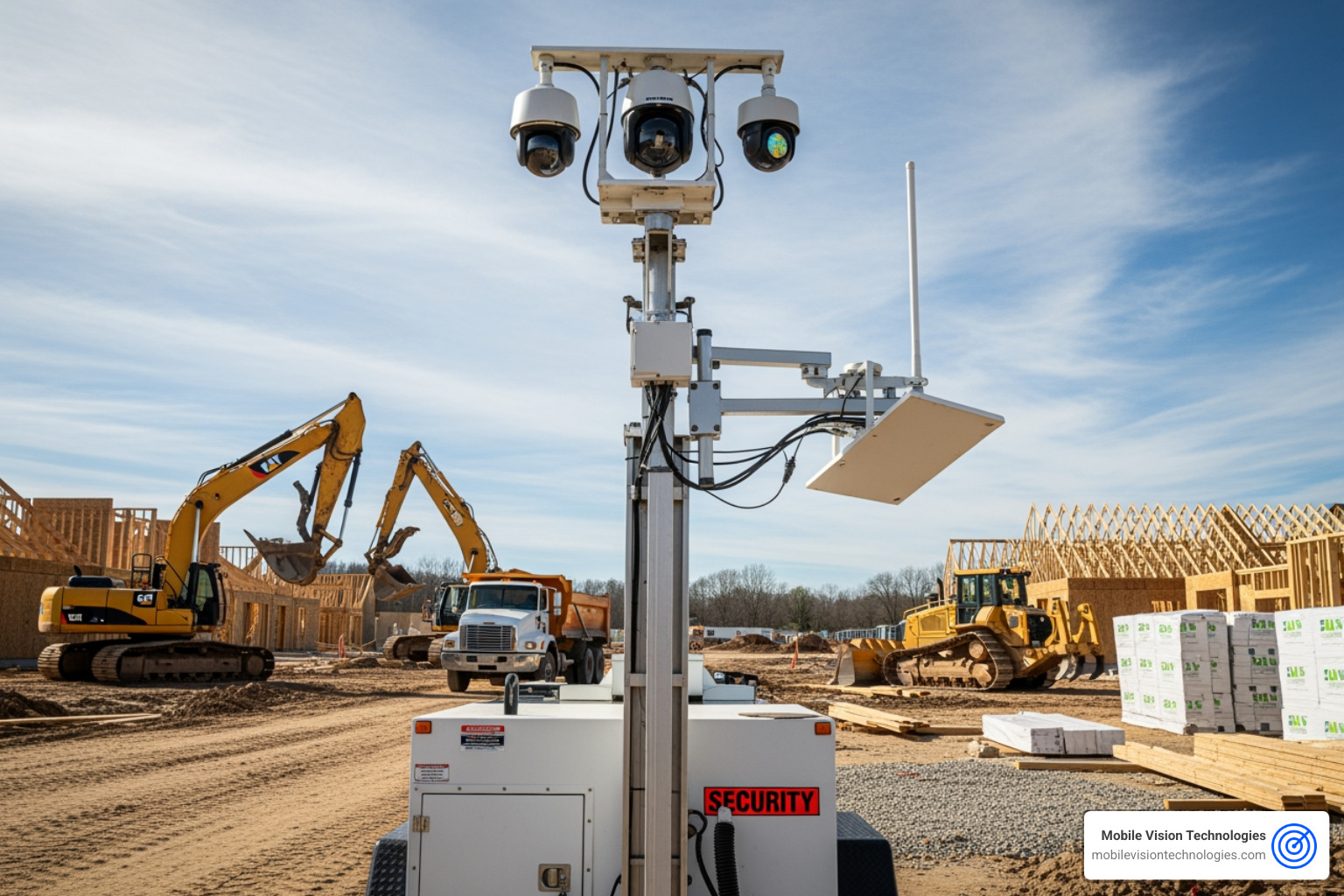
- Perimeter Intrusion Detection Systems (PIDS): These systems are the first line of defense, designed to detect intruders at the outer edges of a property, such as fences, walls, or open grounds. They use technologies like fiber-optic fence sensors, microwave barriers, taut-wire systems, active infrared (IR) beams, radar/doppler sensors, and thermal imaging cameras. PIDS are critical for large industrial complexes, critical infrastructure sites, and especially for temporary installations like construction sites. Our Construction Site Surveillance Systems are a prime example, providing robust perimeter protection in challenging environments.
- Interior Intrusion Detection Systems: Once the perimeter is secured, interior systems monitor movement or unauthorized entry inside buildings, specific rooms, or secure zones like vaults. They employ motion detectors (PIR or dual-technology), acoustic sensors, vibration sensors, magnetic contacts, and pressure mats. These are essential for commercial offices, retail stores, warehouses, and server rooms to protect valuable assets and sensitive information.
- Digital IDS: While our focus is on physical security, it’s important to note that digital intrusion detection systems monitor network activity for signs of a breach, such as changes to critical files, repeated failed login attempts, or abnormal network connections. This highlights the growing need for integrated security across both physical and digital fields.
By combining these building blocks and types, we create a robust, multi-layered defense that provides unparalleled security for your property.
Choosing the Right System: Key Features and Considerations
Selecting the ideal property intrusion detection system requires careful consideration of your unique needs and vulnerabilities. We believe in empowering our clients with knowledge to make informed decisions.
Essential Features for Effective Property Intrusion Detection
When evaluating an IDS, look for these critical features:
- Real-Time Monitoring & Alerts: The speed of detection and notification is paramount. An effective system provides instant, actionable alerts, enabling rapid response to potential threats. You need to know how quickly you’d be informed if a perimeter fence is cut or forced entry occurs.
- Threat Detection & Analytics: Modern IDS leverage machine learning and AI to distinguish between genuine intruders and environmental factors like animals or weather, significantly reducing false alarms. This intelligent analysis improves the accuracy of threat detection.
- Integration Capabilities: A disjointed security system isn’t particularly secure. Look for an IDS that seamlessly integrates with your existing security tools, such as Access Control Systems, CCTV, and building management systems. This creates a unified, layered security ecosystem for better event correlation and response.
- Flexibility & Scalability: Your security needs may evolve. Choose a system that offers flexible deployment options (cloud-based, on-premise, or hybrid) and can scale with your business, whether you need to cover a single site or multiple locations. Some advanced systems support over 500 programmable zones, demonstrating immense adaptability.
- Customization: The ability to customize rules and reporting features is crucial for tailoring the system to your specific operational requirements and for generating detailed audit trails.
- Remote Access: With our mobile surveillance solutions, you can receive notifications and manage your security system remotely via a smartphone app, putting vigilance right in your pocket.
The Power of AI and Machine Learning in Modern IDS
Artificial Intelligence (AI) and machine learning (ML) are game-changers in property intrusion detection, particularly in tackling one of the most common frustrations: false alarms. According to recent research, 62 percent of home security system users experienced false alarms over the past year. This “alert fatigue” can lead security teams to dismiss warnings, potentially missing real threats.
This is where AI shines. High-precision AI surveillance technology can effectively filter out up to 99.95% of false alarms, minimizing noise fatigue, unnecessary panic, and expenses. AI algorithms can analyze vast amounts of data, learning normal patterns of activity and flagging deviations as potential threats. This anomaly-based detection significantly improves threat accuracy and reduces the likelihood of missing genuine intrusions. By interpreting movement intelligently and leveraging advanced processing, AI improves the clarity and reliability of your intrusion detection.
Tailoring Your System to Different Environments
No two properties are alike, and effective property intrusion detection systems must be custom to the specific environment:
- Commercial Buildings: For businesses in Memphis, Bartlett, or Jackson, an IDS is vital. With over 600,000 businesses falling victim to crime annually, integrated systems with motion detectors, glass-break sensors, and magnetic contacts are crucial. We also recommend complementing indoor systems with thermal perimeter detection for outdoor areas and incorporating alarm verification (audio/video) for faster police response. Our Warehouse Security Systems are designed to protect valuable inventory and equipment.
- Retail Stores: Beyond general intrusion, retail environments in Germantown or Olive Branch face unique challenges like shrinkage and loss prevention. IDS here must integrate with Electronic Article Surveillance (EAS) and robust video surveillance, including Parking Lot Security Cameras, to monitor both interiors and customer-facing areas effectively.
- Data Centers: These critical infrastructure sites demand the highest level of physical asset protection. Intrusion detection systems here often include advanced perimeter solutions, seismic detectors to sense vibrations from drilling or cutting, and stringent interior monitoring to safeguard sensitive data and operational technology.
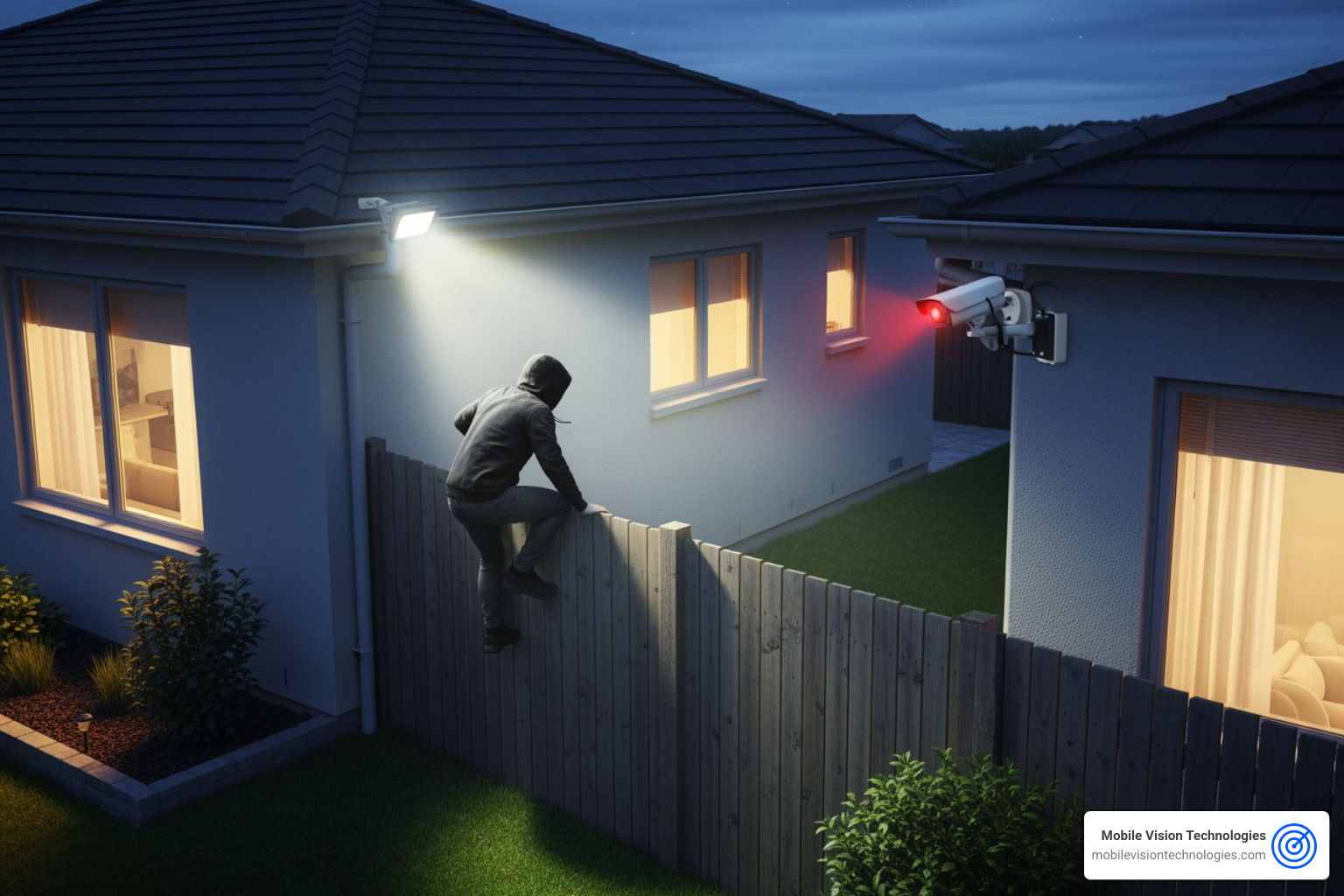
- Residential Properties: Home security is increasingly becoming the norm, with 72 percent of homes having an alarm system in place. For homes in Lakeland or Southaven, layered detection is key. This includes outdoor sensors for the perimeter and garden that filter out animals, driveway sensors that monitor vehicles and foot traffic, and sensors for vulnerable entry points like doors and windows. Advanced indoor sensors can use digital logic to filter out pets and HVAC interference, delivering precise detection. Wireless sensing, which detects interruptions to Wi-Fi signals caused by motion, offers full coverage and respects privacy by not collecting personal information. You can explore a range of residential intrusion detection sensors to protect your home.
IDS and Active Deterrence: Maximizing Your Security Investment
When we talk about property intrusion detection, it’s crucial to understand the difference between simply detecting a threat and actively preventing it. This distinction guides informed purchasing decisions and helps maximize your security investment.
IDS and Active Deterrence: Detection and Response
An Intrusion Detection System (IDS) is like a vigilant “watchdog.” Its primary role is to monitor, detect, and alert you to unauthorized activity. It’s passive in its response, informing you that an event is occurring or has occurred.
However, to truly maximize your security, we often pair IDS capabilities with “active deterrence” measures. Think of active deterrence as the “guard” that takes immediate action. While an IDS is designed to detect and inform, active deterrence is designed to detect and stop or discourage an intrusion in real-time.
Here’s a quick comparison:
| Feature | Intrusion Detection System (IDS) | Active Deterrence |
|---|---|---|
| Function | Passive: Monitors and detects | Active: Monitors, detects, and prevents/stops |
| Action | Generates alerts (audible, silent, notifications) | Triggers immediate countermeasures (lights, sounds, calls) |
| Primary Goal | Informing security personnel or property owner | Deterring or stopping intruders in progress |
Our mobile surveillance units are a prime example of active deterrence. They combine advanced motion detection with powerful floodlights and real-time audio deterrents. When an unauthorized presence is detected, these units can immediately activate bright lights, sound loudspeakers with warnings, and send live video feeds to our monitoring center. This creates an “invisible perimeter” that surprises and shocks would-be intruders, actively preventing crime before it escalates. It’s about solving problems before they happen, protecting your property, materials, equipment, and employees, and reducing costly downtime.
By combining the intelligence of an IDS with the immediate action of active deterrence, you create a comprehensive, layered defense that is both informative and preventative.
Common Mistakes When Purchasing an IDS
Even the best technology can fail if not chosen or managed correctly. Here are common pitfalls we help our clients avoid when investing in property intrusion detection:
- Ineffective Systems: Choosing a system that generates too many false alarms is a recipe for disaster. As mentioned, 62 percent of home security system users experienced false alarms last year. This leads to “alert fatigue,” where security teams start ignoring warnings, potentially missing a real threat. We ensure our systems, particularly those with AI, are tuned to minimize these irrelevant alerts.
- Standalone Solutions: Opting for systems that don’t integrate with your existing security infrastructure creates fragmented security. A disjointed system hinders event correlation, making effective response difficult. We advocate for integrated solutions that work seamlessly with your cameras, access control, and other security tools.
- Overspending on Unnecessary Features: It’s tempting to buy the system with the nicest sales pitch, but overspending on features you don’t need can mean missing crucial ones. We help you identify your unique risks and prioritize features that offer genuine value for your specific environment.
- Unmanaged Systems: An IDS is not a “set it and forget it” solution. Neglecting system management and maintenance means it can become stagnant and ineffective over time. Regular updates, checks, and professional monitoring are essential to ensure peak performance. At Mobile Vision Technologies, we provide comprehensive Installation, Maintenance & Monitoring services to keep your system running flawlessly.
- Ignoring Compliance Needs: With growing regulatory and governmental mandates, selecting a non-compliant system can lead to significant penalties. We ensure our solutions help you meet required standards for monitoring, auditing, and rapid incident response.
Avoiding these pitfalls ensures your investment in property intrusion detection delivers real, tangible security benefits.
The Future of Property Intrusion Detection
The landscape of property intrusion detection is constantly evolving, driven by technological advancements and the increasing sophistication of threats. As we look towards 2025 and beyond, we anticipate several key trends that will shape the future of security.
- Predictive Analytics: Leveraging AI and machine learning, future IDS will move beyond simply detecting current threats to predicting potential vulnerabilities and intrusion attempts based on historical data and environmental factors. This proactive stance will allow for even earlier intervention.
- Sensor Fusion: The integration of multiple sensor types—video, acoustic, motion, thermal, and more—will become even more sophisticated. By combining data from diverse sensors, systems will gain a more complete and accurate understanding of a situation, drastically reducing false alarms and improving detection capabilities.
- Cloud-Based Platforms: The shift towards cloud-based security platforms will accelerate, offering improved scalability, flexibility, and remote management capabilities. This allows for seamless updates, centralized control, and access to security data from anywhere. Our Mobile Video Surveillance solutions already accept this flexibility, providing real-time property and customer safety.
- Increased Remote Capabilities: With advancements in IoT and connectivity, remote monitoring and deterrence will become even more powerful. This includes improved mobile surveillance units with advanced AI, capable of autonomous patrols and more sophisticated remote interventions, crucial for large or remote sites like those managed by our Law Enforcement Mobile Surveillance Systems.
- IoT Integration and Connectivity: The proliferation of IoT devices, projected to reach 50 billion by 2030, will mean more data points and more interconnected security components. This vast network of sensors will create highly intelligent and responsive security ecosystems, particularly beneficial for Multi-Location Security Solutions across different cities like Memphis, Jackson, and Southaven.
At Mobile Vision Technologies, our unique strength lies in combining advanced IoT expertise with traditional security experience. This blend allows us to develop flexible, full-service protection that is not only robust but also future-proof, ensuring your property remains secure against tomorrow’s challenges.
Frequently Asked Questions about Property Intrusion Detection
What’s the biggest benefit of integrating an IDS with CCTV?
The biggest benefit of integrating an IDS with CCTV is achieving a unified security view and significantly improving response efficiency. When an IDS triggers an alert, the integrated CCTV system can automatically direct cameras to the area of concern, providing visual verification of the event. This visual context is invaluable: it helps security personnel quickly assess the situation, determine if it’s a genuine threat or a false alarm, and initiate the most appropriate response. This synergy leads to reduced false alarms, faster and more accurate responses, and provides a comprehensive, centralized management system for your property’s security.
Can I install an intrusion detection system in a rental property?
Yes, absolutely! Many modern property intrusion detection systems, especially wireless ones, are designed to be plug-and-play and don’t require permanent alterations to the property. This makes them ideal for rental units. We recommend checking with your property management or landlord first, as some may have specific guidelines. Solutions like smart locks can also be integrated, allowing for easy code changes between tenants without needing to replace physical keys, which is a great way to protect your rental properties and make renters feel safer.
How do I choose the right system for my business?
Choosing the right property intrusion detection system for your business involves a few key steps:
- Assess Your Unique Risks: Identify your most vulnerable assets, entry points, and potential threats. Is it a construction site in Lakeland needing perimeter security, or a retail store in Germantown focused on preventing internal theft?
- Consider Property Size and Layout: The physical dimensions and layout of your property will dictate the type and number of sensors, cameras, and mobile surveillance units required.
- Determine Your Budget: While security is an investment, we work with you to find solutions that offer the best protection within your financial parameters.
- Evaluate Integration Needs: Think about how the new IDS will interact with your existing security systems, such as access control or CCTV. Seamless integration is key to comprehensive security.
- Prioritize Scalability: Choose a system that can grow with your business and adapt to future changes in your security needs.
- Seek Expert Consultation: The best approach is to consult with security professionals. At Mobile Vision Technologies, we offer expert guidance custom to businesses in Memphis, Bartlett, and across the Mid-South, helping you design a system that meets your specific requirements. Contact Us today to discuss your needs.
Conclusion
In an increasingly complex world, the importance of robust property intrusion detection cannot be overstated. It’s clear that relying on outdated security measures leaves your assets, operations, and people vulnerable. Modern IDS offer a proactive defense, moving beyond simple locks to provide intelligent, real-time monitoring and early warnings that can prevent incidents before they escalate.
We’ve explored the core components, from sophisticated video analytics and IoT sensors to perimeter and interior detection systems. We’ve seen how AI and machine learning are revolutionizing threat detection by drastically reducing false alarms, and how systems must be custom to diverse environments, whether it’s a busy commercial building, a remote construction site, or a residential property. Crucially, we’ve highlighted the power of integrating IDS with active deterrence measures, creating a layered defense that not only detects but also actively discourages intruders.
At Mobile Vision Technologies, we pride ourselves on combining advanced IoT expertise with traditional security experience. This unique blend allows us to offer flexible, full-service protection, including intelligent mobile surveillance systems and cutting-edge intrusion detection, designed to keep your property and people safe across Memphis, Bartlett, Southaven, Jackson, Germantown, Lakeland, and Olive Branch.
Don’t wait for a breach to happen. Take the next step in securing your property with a comprehensive, intelligent property intrusion detection system.
Explore our mobile video surveillance solutions today and find how we can help you achieve unparalleled peace of mind.