
AI Security Cameras: Ultimate 2026 Guide
Why AI Security Cameras Are Changing the Game for Modern Security
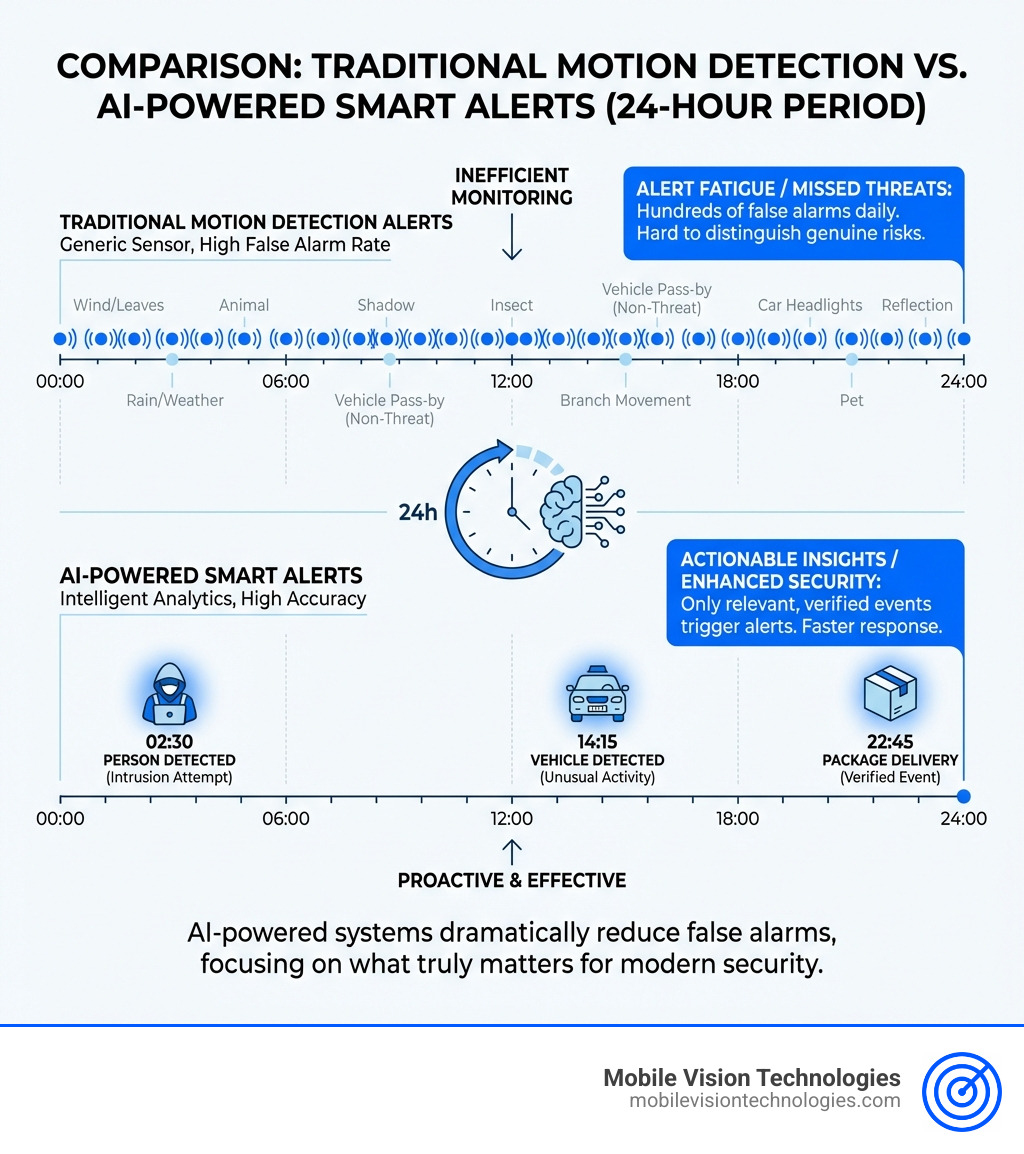
AI security cameras use artificial intelligence to analyze video feeds in real-time, identifying specific objects (people, vehicles, packages), detecting unusual behavior (loitering, intrusions), and sending smart alerts only when genuine threats appear—dramatically reducing false alarms compared to traditional motion-detection systems.
Key capabilities of AI security cameras:
- Object Detection & Classification – Distinguishes between people, vehicles, animals, and objects
- Behavioral Analysis – Identifies loitering, intrusions, altercations, and suspicious activity
- Facial Recognition & LPR – Matches faces against watchlists and reads license plates
- Smart Alerts – Sends notifications only for relevant events, not every motion
- Forensic Search – Quickly finds specific footage using keywords like “red jacket” or “white van”
- Automated Deterrence – Triggers lights, sirens, or audio warnings when threats are detected
For decades, security cameras have done one thing: record footage. If something bad happened, you’d spend hours scrubbing through video hoping to find it. Motion sensors helped, but they also triggered alerts for every squirrel, shadow, or swaying branch—creating false alarm fatigue that made real threats easy to miss.
AI changes everything. Instead of just recording, these cameras understand what they’re seeing. They know the difference between a delivery driver and an intruder. They detect when someone’s casing your property, not just walking by. And they alert you to what matters, when it matters.
The numbers back this up. Businesses deploying AI security systems report 30-60% reductions in security costs, fewer false alarms, and faster response times. The global AI security software market is growing at over 35% annually through 2028. For industries like retail, construction, warehousing, and property management, AI security cameras are becoming essential—not optional.
I’m Chris Edens, and I’ve spent my career protecting people and property, from my early days in the army to now using forward-thinking technology to secure sites remotely. AI security cameras have transformed how we approach surveillance, especially for large, remote, or temporary locations that traditional systems struggle to cover effectively.
The Core Capabilities of AI Security Cameras
At Mobile Vision Technologies, we understand that modern security demands more than just passive recording. It requires intelligent, proactive solutions. That’s where AI security cameras shine. By leveraging advanced computer vision and machine learning, these systems perform sophisticated video analytics to identify, understand, and respond to events, changing surveillance into powerful threat prevention.
How does object detection work in AI security cameras, and what are its benefits?
Object detection is one of the foundational capabilities of AI security cameras. Instead of simply detecting motion (like a traditional camera), AI can identify and classify specific objects within its field of view. This means it can tell the difference between a person, a vehicle, or an animal. For example, a camera might detect a human, then classify them as a “delivery driver” based on their actions, or an “intruder” if they are in a restricted area after hours.
This ability to classify objects is incredibly beneficial. It dramatically reduces false alarms, which are a major source of frustration and inefficiency with traditional systems. Imagine a security camera overlooking a busy parking lot in Memphis, TN. A traditional camera would trigger an alert for every car passing by or every squirrel scampering across the pavement. An AI camera, however, can be configured to only alert us if it detects an unauthorized person after business hours, or a specific type of vehicle entering a sensitive zone. This provides us with contextual alerts, ensuring our teams only respond to genuinely important events, saving time and resources.
For more in-depth information on how we leverage these smart technologies, check out our solutions for AI-Powered Video Surveillance.
What is facial recognition and license plate recognition (LPR)?
Beyond basic object detection, AI security cameras can incorporate advanced identification technologies like facial recognition and License Plate Recognition (LPR).
Facial recognition technology analyzes an individual’s unique facial features and compares them to a database of known individuals. This can be used for various purposes, such as granting access to authorized personnel in a secure facility in Jackson, TN, or identifying individuals on a “watchlist” who are prohibited from entering a property. While powerful, the use of facial recognition raises significant privacy considerations, which we will discuss later.
License Plate Recognition (LPR) functions similarly but for vehicles. AI cameras equipped with LPR can read and record license plate numbers from passing or parked vehicles. This data can then be cross-referenced with databases to identify known vehicles, track entry and exit times, or flag suspicious vehicles. For example, in a parking lot in Bartlett, TN, LPR can help us manage access, monitor for stolen vehicles, or track delivery trucks, enhancing overall site security.
How do AI cameras detect and respond to unusual activity?
AI security cameras are not just about identifying what is in the scene, but what it is doing. This is where behavioral analytics and anomaly detection come into play. By learning what “normal” activity looks like over time, AI can identify deviations that signal unusual or suspicious behavior.
This includes detecting:
- Loitering: A person lingering in an area for an unusual amount of time.
- Altercations: Sudden movements or groups forming that suggest a fight.
- Intrusion: Someone entering a restricted area.
- Abandoned Objects: A package or bag left unattended in a public space.
When such unusual activity is detected, AI security cameras can trigger real-time alerts to our monitoring teams. But they don’t stop there. Many systems can initiate automated deterrence measures, such as flashing lights, sounding an alarm, or even using a speaker to issue a verbal warning. This proactive approach can often de-escalate a situation or deter a potential threat before it becomes a serious incident, a capability that is especially valuable for our clients in Germantown, TN.
For robust protection against unwanted intrusions, explore our Alarm & Intrusion Detection services.
What are other valuable AI camera analytics?
The capabilities of AI security cameras extend far beyond basic detection and alerts, offering a wealth of analytical tools that provide deeper insights:
- Object Tracking: Once an object (like a person or vehicle) is detected, AI can continuously track its movement across a scene, or even across multiple cameras. This is crucial for understanding an event’s progression and gathering comprehensive evidence.
- Occupancy Counting: AI can accurately count the number of people entering and exiting a specific area, providing real-time occupancy levels. This is valuable for managing crowd control, ensuring compliance with capacity limits, or understanding traffic flow in commercial spaces in Southaven, MS.
- Crowd Detection: Beyond simple counting, AI can identify crowd formation and density, alerting us to potential safety risks or unusual gatherings.
- Heat Mapping: This analytic visually represents areas of high traffic or activity within a camera’s view, helping businesses optimize layouts, understand customer behavior, or identify bottlenecks.
These advanced analytics provide powerful operational intelligence, allowing us to not only improve security but also improve efficiency and decision-making for our clients.
How AI is Revolutionizing Security for Home and Business
The adoption of AI security cameras marks a significant shift in how we approach safety and surveillance, offering unprecedented levels of Return on Investment (ROI), enabling proactive policing, driving substantial cost reductions, and ultimately providing vastly improved protection across various settings, from individual homes to sprawling commercial properties.

Can AI-powered security features help alleviate home security paranoia?
For many homeowners, the thought of constant surveillance can be a double-edged sword. While security is desired, the information overload and constant alerts from traditional systems often lead to increased paranoia and anxiety. Imagine getting a notification every time a leaf blows past your camera or a neighborhood cat crosses your yard. This “false alarm fatigue” can make people grow jumpy, as one external source notes, “the paranoia of constant security alerts and false alarms.”
However, AI-powered security features are designed to soothe this paranoia. By intelligently filtering out irrelevant events, AI provides smart notifications that only alert us to what truly matters—a person at the door, a package delivery, or an unfamiliar vehicle. This targeted approach acts like a “club bouncer for notifications,” ensuring that our attention is only drawn to pertinent events. A 2023 study from construction company CraftJack showed that 1 in 4 users worry about their cameras being hacked, and over 60% believe ‘their devices are always listening.’ While these fears are often unfounded (devices aren’t always listening, and hacking home security remains difficult), AI’s ability to provide relevant, filtered information can help instill a sense of security. Other studies have shown that ethical system designs with privacy safeguards can reduce surveillance-related stress, leading to greater peace of mind.
What are the benefits of using AI security software for businesses?
For businesses, the transition to AI security software offers a compelling business case, primarily driven by substantial cost reductions and improved protection. Many clients report 30–60% reductions in security costs after deploying AI security camera systems. This is achieved by:
- Cost Reduction: AI can significantly reduce the reliance on expensive human security guards for 24/7 monitoring. Instead of a team of guards, a smaller team can effectively monitor a larger area, responding only to AI-flagged incidents. This also minimizes losses from theft and vandalism, and can even lead to lower insurance premiums.
- Improved Protection: AI provides consistent, unbiased 24/7 monitoring, tirelessly scanning for threats that human eyes might miss during long shifts. This leads to proactive detection of suspicious activities and faster response times.
- Operational Efficiency: Beyond security, AI offers valuable operational intelligence. It can analyze customer traffic patterns in retail spaces, monitor queue lengths, track product interactions, and optimize employee workflows, providing data-driven insights to improve business operations.
Industries across our service areas, including Memphis, Lakeland, and Olive Branch, MS, are benefiting:
- Cannabis Retail: Ensuring compliance with video retention laws, preventing theft, and monitoring customer behavior.
- Jewelry Stores: Detecting suspicious loitering, protecting high-value inventory, and identifying “grab-and-run” attempts.
- Auto Dealerships: Providing 24/7 surveillance of vehicle lots, preventing theft, and detecting after-hours intrusions.
- Self-Storage Facilities: Monitoring access points, verifying unit entry, and preventing theft.
- Construction Sites: Preventing equipment theft, controlling site access, and monitoring safety protocols, which is critical for construction projects. For more details, see our Construction Site Surveillance Systems.
- Property Management: Efficiently overseeing multiple locations and enhancing resident safety for commercial and residential properties.
- Warehouses: Preventing unauthorized access, monitoring inventory, and ensuring personnel safety. Learn more about our Warehouse Security Systems.
- Parking Lots: Reducing incidents, preventing illegal dumping, and enhancing safety. See our Parking Lot Security Cameras.
How can AI assist law enforcement and public safety?
AI security cameras are proving to be invaluable tools for law enforcement and public safety agencies, acting as a force multiplier for understaffed police departments. These systems can significantly speed up investigations, improve evidence gathering, and enable more proactive policing strategies.
Consider a scenario where an incident, such as a localized explosion, occurs during a public event. Traditionally, police would rely on witness accounts, which can be unreliable, and extensive detective work, which is time-consuming. However, with AI security cameras in place, officers can quickly pinpoint the exact moment of the incident, identify when a device was placed, and reveal the individuals involved. An investigation that might typically take weeks or months can be resolved in a matter of days.
This efficiency stems from several AI capabilities:
- Faster Investigations: AI-powered forensic search features allow investigators to filter through hours of footage using keywords like “person wearing red jacket” or “white van,” quickly locating relevant clips.
- Evidence Gathering: AI can automatically tag and categorize relevant events, providing clear, contextualized evidence for legal proceedings.
- Proactive Policing: By continuously monitoring public areas, AI can identify suspicious behaviors (e.g., loitering, unusual gatherings) or objects (e.g., abandoned packages) early, allowing law enforcement to intervene before a crime occurs.
- Crime Hotspot Identification: Over time, AI systems can analyze patterns and trends, helping law enforcement identify crime hotspots and deploy resources more strategically.
This change allows police to shift from reactive incident response to proactive crime prevention, making communities safer.
Key Considerations for Implementing an AI Camera System
Implementing an AI security camera system is a strategic investment that requires careful planning. It’s not just about installing cameras; it’s about designing a comprehensive security solution that meets your specific needs, integrates seamlessly with existing infrastructure, and is prepared for future challenges. A thorough security assessment is the first step towards future-proofing your property.
Unique Security Needs, Cost, and Long-Term Value
When considering an AI camera system, we must first understand the unique security needs of your specific spaces. Whether it’s a construction site in Memphis, TN, a commercial property in Jackson, TN, or a remote industrial facility, each location presents specific vulnerabilities and threat scenarios. The choice of AI CCTV cameras should be based on their ability to address these particular challenges, rather than a one-size-fits-all approach. For instance, a construction site might prioritize theft detection and access control, while a retail store might focus on customer traffic analysis and preventing shoplifting.
Regarding cost, AI security cameras often come with a higher upfront investment compared to traditional models. However, it’s crucial to evaluate the long-term value and return on investment (ROI). This isn’t just about the initial purchase price but also the potential for reduced operational costs over time. With fewer false alarms, less need for constant human monitoring, and the ability to prevent incidents before they occur, AI systems can lead to significant savings. The improved protection and operational insights they provide often justify the initial investment, making them a more cost-effective solution in the long run.
Ease of Integration and Scalability
Another critical factor is the ease of integration with your existing infrastructure. Many businesses already have traditional CCTV systems, access control, or alarm systems. An effective AI camera system should be able to integrate seamlessly with these current technologies, creating a cohesive security framework rather than a fragmented one. Open AI camera systems are particularly valuable as they can connect with various devices and software, enabling more efficient incident management and a unified security platform. Mobile Vision Technologies specializes in solutions that improve your existing setup without requiring a complete overhaul.
Scalability is equally important. As your business grows or technology evolves, your security needs will change. Selecting an AI camera system that can easily expand, adapt to new advancements, and incorporate additional cameras or analytics ensures its continued relevance and effectiveness. Our mobile surveillance solutions, for example, are designed to be flexible and scalable, allowing you to deploy advanced monitoring capabilities exactly where and when they are needed most. This ensures that your investment today will continue to protect you effectively into the future. For more details on flexible surveillance, see our Mobile Video Surveillance options.
Navigating Privacy, Data, and the Future of AI Security
The power of AI security cameras comes with significant responsibilities, particularly concerning data privacy and cybersecurity. As we accept these advanced systems, we must also address the ethical implications, understand market trends, and prepare for future developments.
What are the privacy concerns and how can they be mitigated?
The extensive data collection capabilities of AI security cameras naturally raise privacy concerns. Issues such as the potential for hacking, misuse of collected footage, and the ethical debate surrounding facial recognition technology are top of mind for many. A 2023 study showed that 1 in 4 users worry about their cameras being hacked, and over 60% believe ‘their devices are always listening.’
To mitigate these concerns, several strategies are crucial:
- Transparency: Clear communication about what data is being collected, why, and how it will be used is essential.
- Robust Data Management Practices: Implementing strong encryption, secure storage, and strict access controls for all video and analytical data.
- Privacy by Design: Incorporating privacy features like privacy masking (blocking out sensitive areas in the camera’s view) and data anonymization.
- Compliance with Regulations: Adhering to relevant data protection laws. For example, Illinois’ Biometric Information Privacy Act (BIPA) is a notable piece of legislation that governs the collection and use of biometric data, highlighting the increasing legal landscape around these technologies. While specific regional regulations vary, the principle of protecting personal data remains universal.
At Mobile Vision Technologies, we are committed to responsible AI deployment, ensuring that the benefits of improved security do not come at the expense of individual privacy.
How does edge computing contribute to the performance and privacy of AI security cameras?
The processing power required for AI security cameras can be handled in two main ways: cloud processing or edge computing. Edge computing plays a vital role in enhancing both the performance and privacy of these systems.
- Local Data Analysis: With edge computing, AI algorithms run directly on the camera or a local device (the “edge”), processing video footage where it’s captured. This means less raw video data needs to be sent to the cloud.
- Reduced Latency: By processing data locally, decisions and alerts can be generated almost instantly, leading to real-time responses—crucial for security applications where every second counts.
- Bandwidth Efficiency: Sending only metadata or condensed event information to the cloud (instead of continuous high-resolution video streams) significantly reduces bandwidth usage, which is particularly beneficial for remote or mobile surveillance units.
- Improved Data Privacy: Because sensitive video data is processed and often stored locally, it reduces the risk of data breaches during transmission to the cloud. Only relevant, anonymized, or aggregated data might be sent off-site, offering an additional layer of privacy protection.
While cloud processing offers scalability and powerful centralized analytics, edge computing provides a compelling balance of speed, efficiency, and improved privacy for our AI security cameras.
What are the current trends and market growth in the AI security industry?
The AI security industry is experiencing rapid growth and constant innovation. The global AI security software market is projected to grow at a Compound Annual Growth Rate (CAGR) of over 35% through 2028. This growth is fueled by several key trends:
- Deeper Contextual Understanding: AI is moving beyond simple object recognition to develop a deeper contextual understanding of events, combining visual data with other inputs (like audio) and even Natural Language Processing (NLP) to interpret situations more accurately.
- Integration with IoT: AI security cameras are increasingly integrating with other Internet of Things (IoT) devices, creating more comprehensive and automated smart security ecosystems.
- Full-Stack Platforms: The market is seeing a consolidation of providers offering full-stack platforms that encompass hardware, software, and analytics, simplifying deployment and management for users.
Here’s a quick comparison of how edge and cloud processing contribute to these trends:
| Feature | Edge AI Processing | Cloud AI Processing |
|---|---|---|
| Data Location | On-device or local server | Remote data centers |
| Latency | Very low (real-time) | Higher (depends on network speed) |
| Bandwidth Usage | Low (only metadata/alerts sent) | High (continuous video streams) |
| Privacy | Improved (sensitive data stays local) | Dependent on cloud provider security and regulations |
| Scalability | Limited by device capacity | Highly scalable, virtually unlimited |
| Processing Power | Limited by device hardware | Virtually unlimited |
| Cost | Higher initial hardware cost, lower ongoing bandwidth | Lower initial hardware, higher ongoing subscription |
Conclusion
The evolution of security from passive recording to active intelligence is undeniable. AI security cameras are no longer a futuristic concept; they are a present-day reality, changing how we protect our homes, businesses, and communities. From providing smarter alerts and reducing false alarms to offering deep operational insights and enhancing public safety, AI is setting new benchmarks for effective surveillance.
At Mobile Vision Technologies, we pride ourselves on combining advanced IoT expertise with traditional security experience. This unique blend allows us to provide flexible, full-service protection that leverages the best of AI security cameras for real-time property and customer safety. Our intelligent mobile surveillance systems, including camera trailers and intrusion detection, are designed to give you peace of mind, knowing that your assets are monitored by smart eyes that understand what they’re seeing.
The future of security is intelligent, proactive, and efficient. We are here to guide you through this change, ensuring you stay one step ahead.
Learn more about our Mobile Video Surveillance solutions