
Artificial intelligence video surveillance: Essential 2026
Open uping Smarter Security with AI Video Surveillance
Artificial intelligence video surveillance uses AI to analyze video footage in real-time. This advanced approach offers significant upgrades compared to older security systems.
Here’s how AI video surveillance improves security:
- Real-time Analysis: It processes video instantly, moving beyond simple recording.
- Proactive Alerts: It flags potential threats as they happen, not after the fact.
- Smart Detection: It can tell the difference between a person, a vehicle, or an animal, reducing false alarms.
- Automated Insights: It turns vast amounts of video data into useful information.
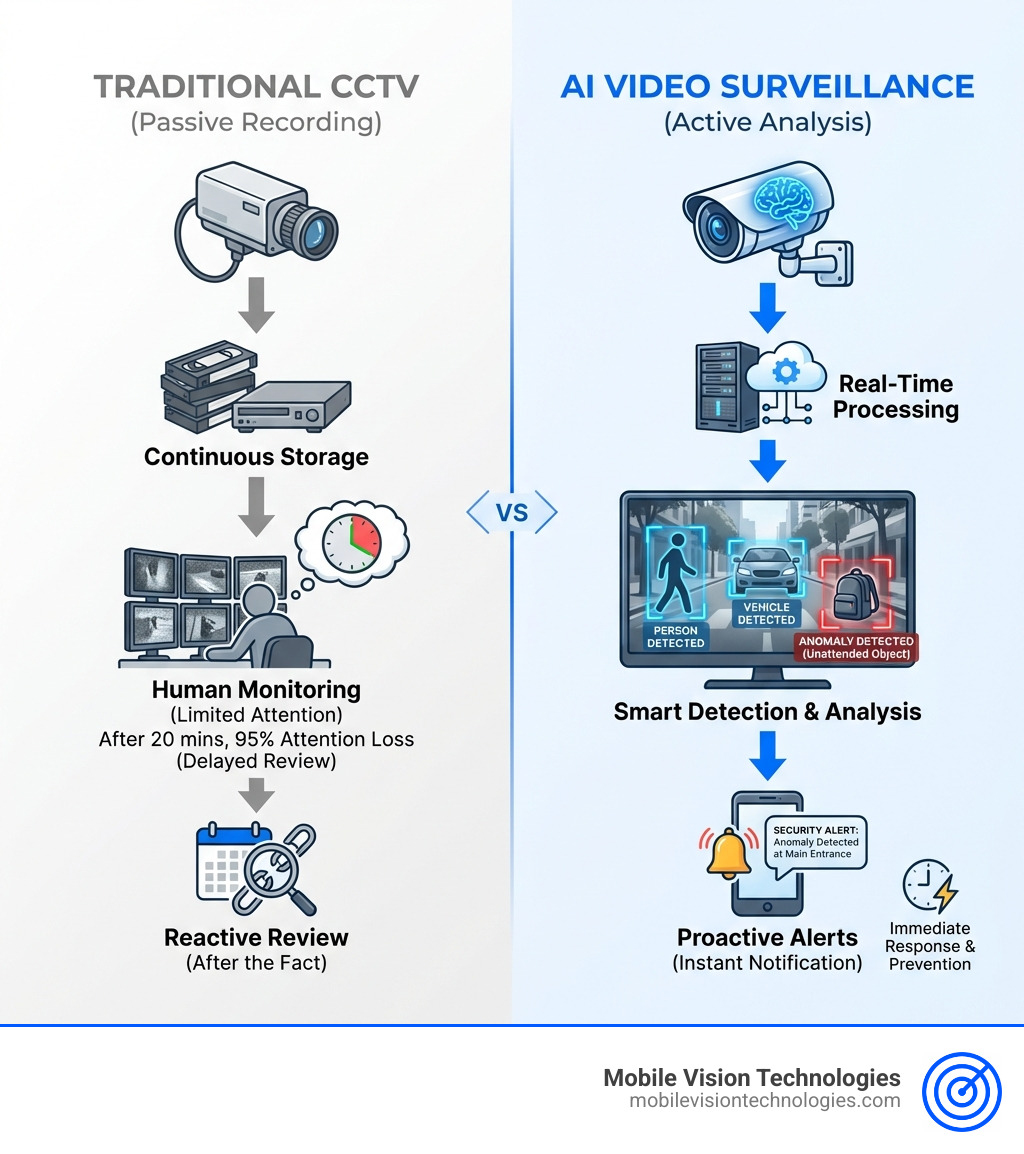
For years, security cameras have been a common sight in homes, businesses, and public spaces. They record countless hours of footage, but traditional systems have big limitations. Humans watching a single video monitor for more than twenty minutes can lose 95% of their ability to pay attention to important events. This means many threats go unnoticed.
This is where AI steps in. Artificial intelligence video surveillance transforms ordinary cameras into intelligent observers. It’s a game-changer, shifting security from passive recording to active, real-time analysis and proactive protection. Instead of just recording problems, AI helps prevent them and responds faster.
Chris Edens has been protecting people for years, starting with his military service. Today, he leverages technology like artificial intelligence video surveillance to ensure safety and security, even in challenging environments. This guide will explore how AI is redefining security.
What is AI Video Surveillance and How Does It Differ from Traditional CCTV?
At its core, artificial intelligence video surveillance uses computer software programs to analyze the audio and images from video surveillance cameras. This analysis allows the system to recognize humans, vehicles, objects, specific attributes, and events. It’s a significant leap from traditional Closed-Circuit Television (CCTV) systems, which, while foundational, have inherent limitations.
Traditional CCTV systems primarily function as recording devices. They capture footage, which is then stored for later review. This means they are largely reactive; you find out what happened after the fact. The effectiveness of traditional CCTV heavily relies on human monitoring. However, as research indicates, human attention spans are notoriously short when it comes to constantly watching video feeds. Studies have shown that humans watching a single video monitor for more than twenty minutes lose 95% of their ability to maintain attention sufficient to discern significant events. This limitation makes traditional surveillance prone to human error and oversight.
Another major drawback of traditional systems is their high false alarm rates. Simple movements like shadows, animals, or even leaves blowing in the wind can trigger alerts. This leads to what we call “alarm fatigue” for security personnel, making them less likely to respond quickly to genuine threats. The security industry itself reports that over 98% of burglar alarms are false ones, often leading to low-priority responses from law enforcement.
Artificial intelligence video surveillance addresses these limitations by infusing intelligence directly into the surveillance process. Instead of just recording, AI-powered systems actively “see,” “understand,” and “react” to what’s happening in real-time. This is made possible by several core enabling technologies:
- Computer Vision: This field of artificial intelligence enables computers to interpret and understand visual information from the world, much like humans do. It allows AI systems to identify objects, people, and actions within video frames.
- Machine Learning (ML): ML algorithms allow systems to learn from data without being explicitly programmed. In surveillance, this means the AI can be trained on vast datasets of video footage to recognize patterns, objects, and behaviors.
- Deep Learning (DL): A subset of machine learning, deep learning uses multi-layered artificial neural networks (like Convolutional Neural Networks, or CNNs) to learn and extract complex features from raw data. This is particularly powerful for image and video analysis, enabling highly accurate object detection and facial recognition.
These technologies allow AI surveillance to do more than just record. They empower systems to process video instantaneously, moving beyond simple recording to real-time analysis and proactive alerts. This significantly improves security measures and improves the overall effectiveness of overseeing spaces.
To illustrate the difference, let’s look at a comparison:
| Feature | Traditional CCTV | AI Video Surveillance |
|---|---|---|
| Analysis | Passive recording, requires human review | Real-time, automated analysis of events and behaviors |
| Alerts | Often triggered by simple motion, high false alarms | Intelligent alerts based on identified threats, low false alarms |
| Search | Manual, time-consuming review of footage | Smart search for specific objects, people, or events |
| Scalability | Limited by human monitoring capacity | Highly scalable, can monitor hundreds of cameras simultaneously |
| Proactivity | Reactive, records incidents for later investigation | Proactive, can detect and even predict potential incidents |
| Efficiency | Resource-intensive due to manual review | Automates tasks, reduces human workload, more cost-effective |
While traditional CCTV laid the groundwork, artificial intelligence video surveillance represents a paradigm shift, changing security from a passive deterrent into an active, intelligent, and highly efficient protective system. This evolution is driven by the need for more reliable, faster, and smarter security solutions in our ever-complex world.
The Core Capabilities and Benefits of AI-Powered Security
Imagine a security guard who never blinks, never gets tired, and can monitor hundreds of screens at once with unwavering attention. That’s the power of AI in video surveillance. The capabilities of AI-powered security cameras translate directly into significant benefits for businesses and communities, providing improved security, reduced workload, and faster response times.
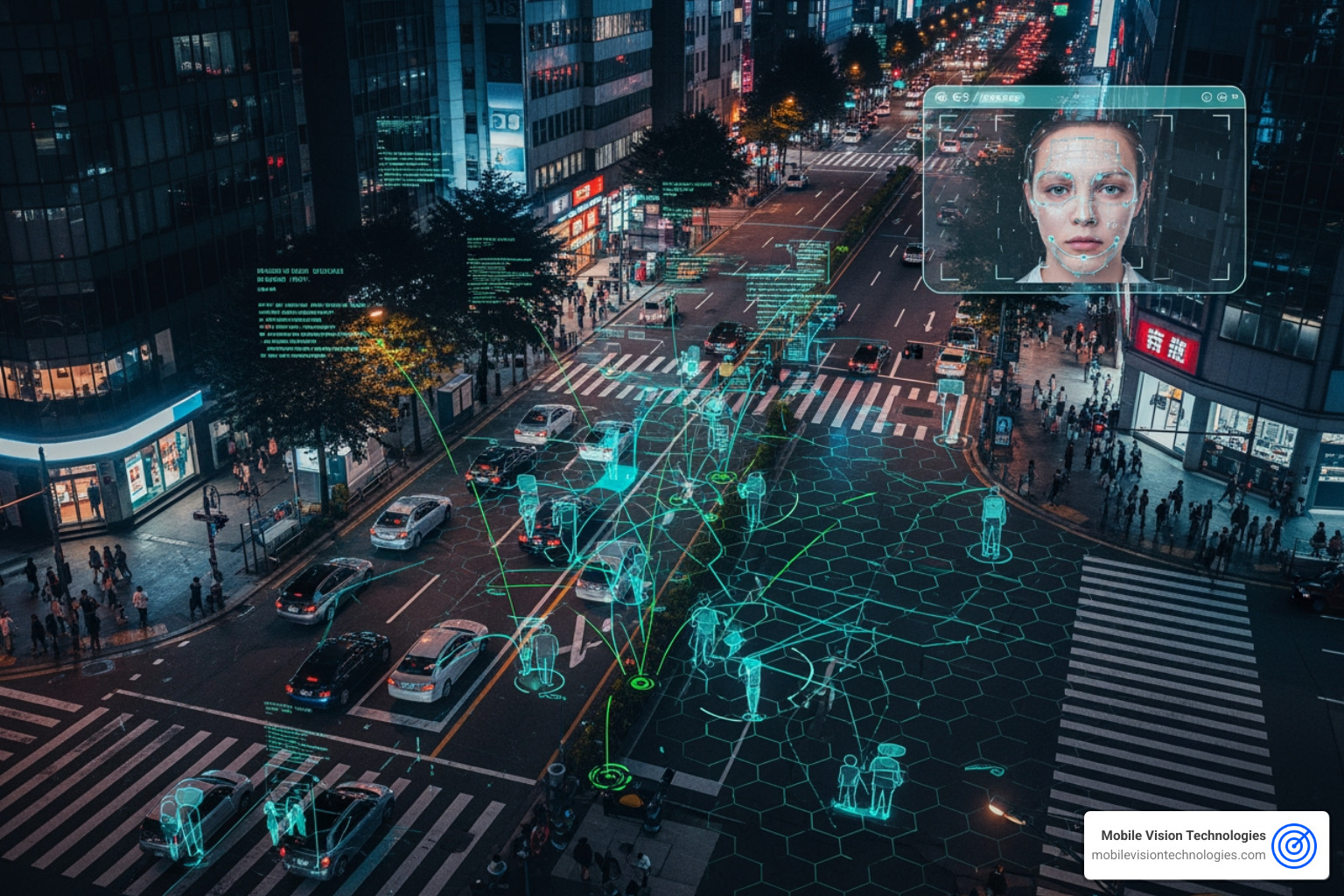
One of the primary advantages is improved security. AI can detect threats with precision and speed by analyzing and monitoring video data. This moves security from a reactive stance to a proactive one, allowing us to anticipate and prevent incidents before they escalate.
Key benefits of AI-powered security systems include:
- Improved Security & Situational Awareness: AI systems act as digital observers, continuously analyzing footage with greater accuracy than humans. They provide real-time situational awareness, ensuring that potential threats are identified quickly.
- Reduced Workload: By automating the tedious task of constant video monitoring, AI significantly reduces the burden on security personnel, allowing them to focus on critical decision-making and response.
- Faster Response Times: With real-time alerts and intelligent threat detection, security teams can respond to incidents much more quickly and effectively.
- Proactive Threat Detection & Predictive Analytics: AI can identify subtle signs of suspicious activity and, through predictive analytics, even forecast potential future risks by analyzing historical data and identifying trends. This allows for strategic resource allocation and proactive security strategies.
- Reduced False Alarms: AI-powered systems can effectively reduce false alarms, a common problem with traditional surveillance. By distinguishing between real threats and insignificant movements, AI-powered systems help security personnel avoid unnecessary alerts, leading to more efficient operations.
Key Capabilities of Artificial Intelligence Video Surveillance
The magic of AI in surveillance lies in its diverse and powerful capabilities:
- Object Detection: Our AI security cameras can differentiate between various object types, such as humans, vehicles (and even specific types of vehicles), and animals. This allows the system to analyze their behavior against learned patterns. For instance, it can detect if a person is loitering in a restricted area after hours or if a vehicle is traveling in the wrong direction in a parking lot.
- Facial Recognition: This advanced capability analyzes an individual’s facial features and matches them against a database. It can identify known individuals (e.g., employees, VIPs) or unknown persons, triggering alerts if someone on a watchlist enters a secured area. This is particularly useful for access control and identifying unauthorized individuals.
- Behavior Analysis & Anomaly Detection: AI learns typical activity patterns for a given environment. When it detects any deviation from these norms—such as unusual motion, objects in unexpected locations, or atypical speeds or interactions—it flags it as an anomaly. This could include detecting fights, unauthorized gatherings, or even unsafe employee actions that could lead to accidents.
- License Plate Recognition (LPR): AI camera systems can automatically analyze and recognize vehicle license plate information. This data can be captured, stored, and processed to detect known or unknown vehicles on-site, alerting security teams to everything from stolen vehicles to VIP arrivals.
- Object Tracking: Advanced AI systems can track detected objects as they move across a scene or even between different cameras. This provides a continuous chain of custody for an object or person of interest, allowing security to follow their movements and zoom in for clearer identification.
- Occupancy Counting: Particularly useful in public spaces or commercial buildings, AI cameras can count people entering and leaving a location. They alert security teams if occupancy levels or crowd sizes exceed pre-defined limits, helping manage crowd density and ensure safety.
These capabilities allow artificial intelligence video surveillance to transform raw footage into actionable intelligence, providing a comprehensive and proactive approach to security that traditional systems simply cannot match. From identifying potential theft in retail environments to monitoring large industrial sites, AI brings a new level of awareness and control.
Implementing Artificial Intelligence Video Surveillance: Applications & Considerations
Bringing artificial intelligence video surveillance into your security strategy isn’t just about installing cameras; it’s about integrating a smart, responsive system that works with your existing infrastructure and meets your unique needs. We understand that every business in Memphis, Bartlett, Southaven, Jackson, Germantown, Lakeland, and Olive Branch has distinct security challenges, and our solutions are designed to be adaptable.
One of the significant advantages of modern AI surveillance systems is their ability to integrate seamlessly with existing security infrastructure. We can integrate our intelligent mobile surveillance systems with your current Access Control Systems and Alarm & Intrusion Detection setups. This means you don’t have to rip and replace everything; instead, you improve your current investments, creating a more cohesive and powerful security framework. This practicality and cost-effectiveness are key, ensuring minimal disruption while maximizing operational efficiency.
When considering the cost implications and Return on Investment (ROI), it’s true that AI CCTV often comes with a higher upfront investment than traditional models. However, this investment typically pays for itself through substantial long-term benefits. AI-powered systems can significantly reduce operational costs by minimizing the need for constant human monitoring and by drastically cutting down on false alarms. By effectively reducing false alarms, our systems save valuable time and resources that would otherwise be wasted on investigating non-threats. We’ve seen how companies often spend far less on security than their actual losses cost them, with consequential losses (like business interruption or reputational damage) being six times the direct insured cost. AI helps bridge this gap by preventing incidents, saving money in the long run.
Industry Use Cases for Artificial Intelligence Video Surveillance
The versatility of artificial intelligence video surveillance makes it invaluable across a wide array of industries:
- Retail Security: In retail environments, AI helps prevent theft by detecting suspicious gestures like concealing objects or handling merchandise atypically. It monitors multiple areas simultaneously, providing real-time alerts to security staff, leading to rapid threat response and minimizing losses. This also contributes to a better customer experience by reducing security incidents.
- Warehouse Security Systems: Warehouses often have vast areas prone to unauthorized access or internal theft. AI can monitor entry points, track inventory movement, and detect unusual activity after hours, protecting valuable assets.
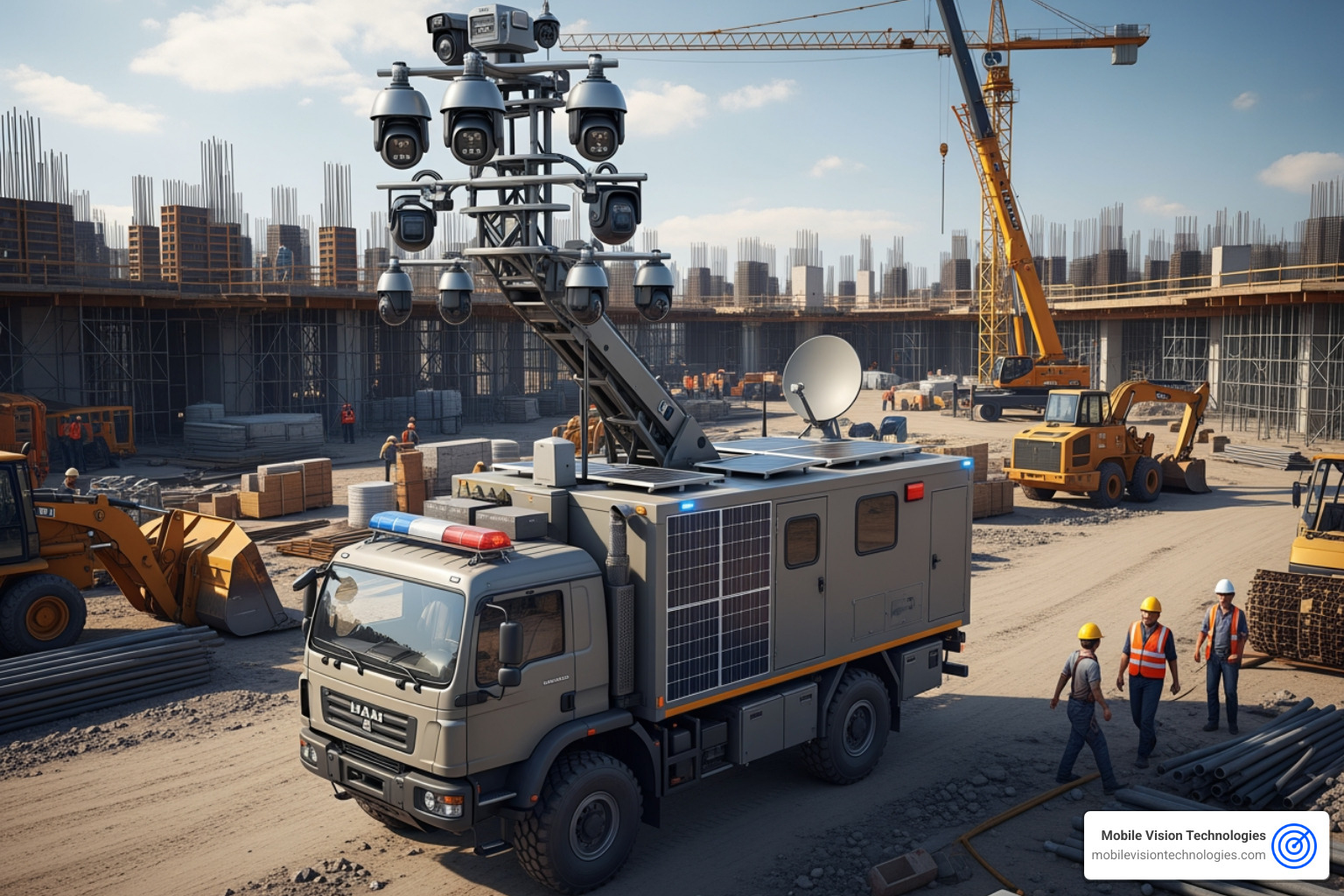
- Construction Site Surveillance Systems: Construction sites are frequent targets for theft and vandalism. Our mobile surveillance units with AI can detect intruders, track their movements, and even deter them with automated warnings, safeguarding equipment and materials.
- Parking Lot Security Cameras: Parking lots can be hotbeds for vehicle break-ins and other criminal activity. AI can monitor for suspicious loitering, unauthorized vehicles, or even detect accidents, enhancing safety for customers and employees.
- Law Enforcement Mobile Surveillance Systems: For our law enforcement partners, AI-powered mobile surveillance systems act as a force multiplier. They can provide verified breach reports to police, allowing for higher priority responses, and assist in monitoring high-crime areas or during special events.
- Multi-Location Security Solutions: Businesses with multiple sites across our service areas—Memphis, Jackson, Southaven, and beyond—can benefit from centralized AI monitoring. This ensures consistent security protocols and efficient management across all locations.
Key Challenges and Considerations
While the benefits are clear, implementing artificial intelligence video surveillance also comes with important challenges and considerations:
- Privacy Concerns: AI cameras capture extensive data, raising critical issues around data protection and compliance with privacy regulations. We believe in establishing clear policies, transparent practices, and robust safeguards to ensure AI video surveillance is used responsibly and respects individual privacy. Our approach prioritizes ethical considerations.
- Data Protection & Cybersecurity Risks: With more data being collected and analyzed, the need for robust cybersecurity measures is paramount. We adhere to strict data protection standards and conduct ongoing threat monitoring to protect your sensitive information. You can learn more about How secure is my data? in our FAQs.
- Potential for Bias: AI algorithms are trained on data, and if that data is biased, the AI can inadvertently perpetuate or amplify existing biases. Mitigating this requires careful data selection, algorithm auditing, and ongoing monitoring to ensure fairness and accuracy.
- Scalability: As your business grows or your security needs evolve, your surveillance system must be able to adapt. We select AI camera systems that are scalable to adapt to future technological advancements and growing security requirements, ensuring continued relevance and effectiveness.
- Installation, Maintenance & Monitoring: The effectiveness of an AI system relies not just on the technology, but on its proper setup and continuous support. Our services include professional Installation, Maintenance & Monitoring to ensure your system performs optimally around the clock.
By carefully addressing these considerations, we ensure that our AI video surveillance solutions are not only powerful but also responsible, reliable, and custom to your specific needs.
The Future Outlook for AI in Video Surveillance
The landscape of artificial intelligence video surveillance is continuously evolving, promising even more sophisticated and integrated security solutions in the years to come. The future will see AI playing an even more central role, making security systems more autonomous, intelligent, and predictive.
One of the most significant trends is the rise of Edge AI. Instead of sending all video data to a central cloud server for processing, Edge AI processes data directly on the camera or on local devices at the “edge” of the network. This drastically reduces latency, improves privacy by processing sensitive data locally, and conserves bandwidth—a crucial factor for large-scale deployments across our service areas. This allows for real-time human action recognition even in resource-constrained environments.
We also anticipate advancements in Continual Learning, where AI systems will learn and adapt over time without needing complete retraining. This means your surveillance system will get smarter and more accurate with every new piece of data it encounters, continuously refining its predictive capabilities and adapting to evolving behavior patterns.
The development of 3D Convolutional Networks (C3D) and other advanced deep learning architectures will enable AI to better understand context and complex actions, moving beyond simple object detection to interpreting nuanced human behaviors and interactions. This will lead to more robust anomaly detection and a deeper understanding of events as they unfold.
Deeper integration with the Internet of Things (IoT) is another key future trend. AI surveillance systems will become more interconnected with other smart devices and sensors, creating a truly holistic security ecosystem. Imagine a system where AI detects an anomaly, triggers an alarm, adjusts lighting, locks doors, and alerts personnel, all automatically and in concert.
The concept of Agentic AI will become more prominent. This refers to AI systems that can not only recognize objects, behaviors, and context but also trigger automated actions based on that recognition. This moves beyond simple alerts to proactive interventions, such as automated voice warnings or specific actions from integrated security devices.
Finally, we expect to see continued growth in VSaaS (Video Surveillance as a Service), making advanced AI surveillance more accessible and scalable for organizations of all sizes. This cloud-based model allows for flexible deployment, easy management, and continuous updates, ensuring businesses in Memphis, Jackson, and beyond can leverage the latest AI security innovations without massive upfront infrastructure investments.
The future of AI in video surveillance is not just about catching criminals; it’s about creating safer, smarter environments through unparalleled accuracy, efficiency, and insight.
Frequently Asked Questions about AI Surveillance
We often get questions about how artificial intelligence video surveillance works and how it can benefit different organizations. Here are some of the most common inquiries we receive:
How does AI surveillance improve upon traditional video surveillance systems?
AI surveillance offers a monumental leap forward from traditional CCTV systems. While traditional systems primarily record footage for later review, AI surveillance adds a layer of intelligence that enables real-time analysis, anomaly detection, and proactive alerts. This means instead of merely documenting an event after it has occurred, AI systems can identify potential threats as they happen, allowing for faster incident response and improved overall security. For example, AI can distinguish between a falling leaf and a person entering a restricted area, drastically reducing false alarms that plague traditional systems.
What are the main benefits of AI-powered video analytics in security operations?
AI-powered video analytics significantly improve security operations by providing continuous monitoring without human fatigue, reducing false alarms, and facilitating real-time alerts for specific incidents. These capabilities improve incident response by quickly identifying suspicious behavior, such as loitering, unauthorized access, or unusual crowd movements. Beyond just security, AI analytics can also provide valuable business insights, helping to optimize operations, improve customer experiences (e.g., in retail), and make proactive decisions based on observed patterns and trends.
Is AI surveillance only for large organizations?
Absolutely not! While large organizations can certainly benefit from AI surveillance, the technology is becoming increasingly accessible and scalable for businesses and communities of all sizes, including those in our local areas like Southaven, Germantown, and Olive Branch. Modern AI solutions can be custom to specific needs and budgets, offering flexible deployment options, including mobile surveillance units. This means even a small business or a local law enforcement agency can leverage the power of AI to improve their security measures, making it a viable and effective solution for everyone.
Conclusion
As we’ve explored, artificial intelligence video surveillance is not just an incremental upgrade; it’s a transformative force in security. It fundamentally shifts our approach from reactive to proactive, providing an intelligent and highly efficient means of protecting people and property. We’ve seen how AI-powered systems overcome the inherent limitations of traditional CCTV, offering capabilities like real-time object detection, facial recognition, behavior analysis, and predictive analytics. These advancements lead to unparalleled accuracy, efficiency, and actionable insights, empowering businesses and communities to anticipate and mitigate threats more effectively.
At Mobile Vision Technologies, we combine advanced IoT expertise with traditional security experience to provide flexible, full-service protection. Our intelligent mobile surveillance systems, including camera trailers and intrusion detection, are designed to deliver real-time property and customer safety for our clients across Memphis, Jackson, and beyond. We believe in using the best of technology to create safer environments.
Ready to experience the future of security? Learn more about our AI Powered Video Surveillance solutions and find how we can tailor a smart, proactive security strategy for you.